
Til Death Do Us Part: The Divorce of the Bottle and the Lid in New Zealand’s Kerbside Recycling
AI and Science| Hugh Parsons
I didn’t expect to be caught in the middle of a breakup at my recycling bin, but here I was, holding a plastic bottle in one hand and its lid in the other. They had, until recently, been the perfect couple, a team, a unit. But now they had to go their separate ways.
I hesitated, stuck in the middle like a marital counsellor for a very small, very plasticy couple. Do I try to keep them together? Do I separate them for the greater good? Do I even know what the greater good is in this situation?
Because, as it turns out, only the bottle could go in the recycling. And standing there, caught between them, it became clear that somewhere along the line, recycling in New Zealand had stopped feeling like a good habit and started feeling like divorce proceedings.
Where It All Falls Apart
In 2024, New Zealand moved towards more standardised recycling rules across councils. A good thing in theory, given how confusing it used to be. Previously, what could be recycled in one region often couldn’t in another, leading to a nationwide guessing game. The Ministry for the Environment/Manatū Mō Te Taiao and local councils introduced the changes so Kiwis would have one clear set of kerbside recycling guidelines across the country [1].
But with this standardisation came a few surprises –One of them being the inability to recycle plastic bottle lids and caps in your kerbside recycling bin. Confusing, because they’re attached to something that can be recycled. If you’ve ever confidently tossed a bottle in the bin, lid still on, you’re not alone. If you’ve ever unscrewed the lid only to immediately forget what to do with it, you’re also not alone.
So why can’t we chuck them in?
It turns out recycling isn’t just about good intentions, it’s also about good mechanics. Recycling plants aren’t run by high-tech magic, rather, they’re industrial sorting lines with very real limitations.
The first issue is size. Bottle lids are tiny. Too tiny. They often slip through the gaps in sorting equipment and end up in the wrong waste stream or in the residue that can’t be processed [2].
Then there is the material problem. Most drink bottles are made from PET (plastic #1), while other packaging, including many lids and caps, can be made from plastic #2 (HDPE) or plastic #5 (polypropylene). These different plastics behave differently during recycling, and mixing them can reduce the quality of the recycled material [3]. That’s part of why the new guidelines say only plastic bottles and containers marked 1, 2 or 5 go in the kerbside bin (with lids removed) [1].
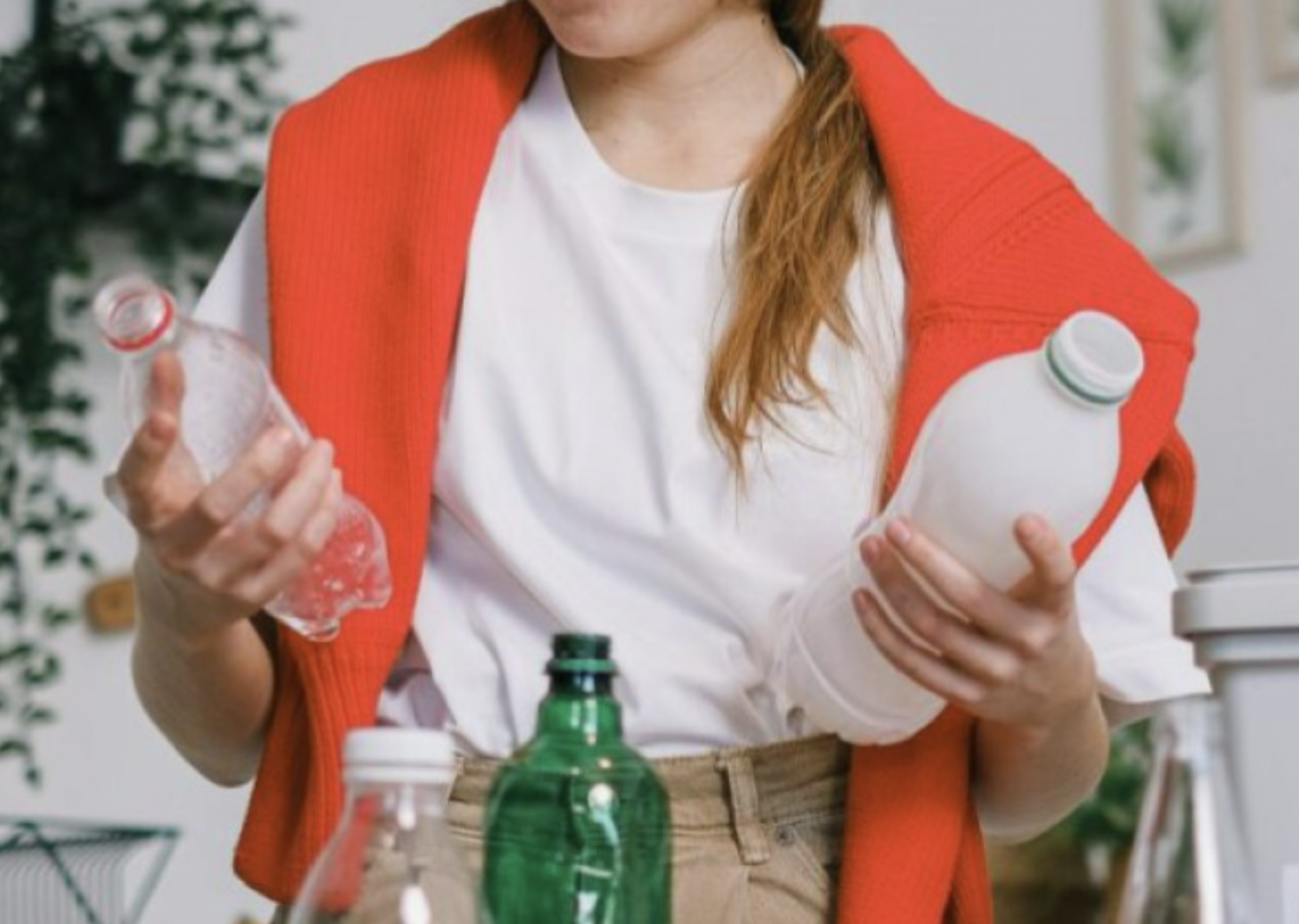
Figure 1: Plastic bottles and lids separated for the kerbside. (Ministry for the Environment, 2024) [1].
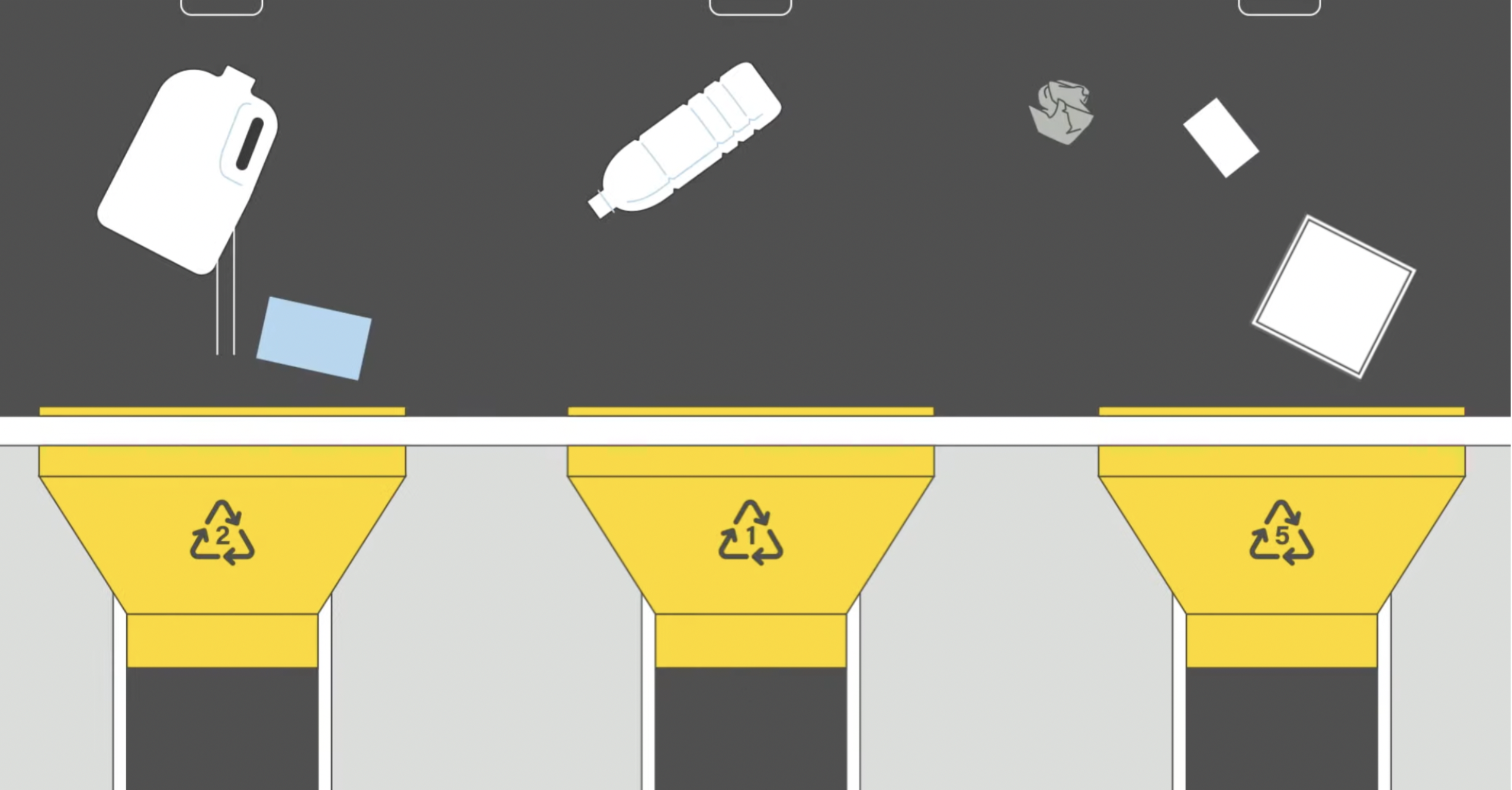
Figure 2: Plastic waste being sorted at a recycling facility. (Ministry for the Environment, 2024) [1].
So even though both parts are technically “plastic,” they don’t always belong in the same recycling process. Which means the humble bottle lid, despite its best intentions, often ends up as waste.
Wait, Am I the Problem?
We are told to rinse our containers. Sort our waste. Learn the rules. Be better recyclers. And for the most part, people try. We do the rinsing and we might even Google the answer, if we’re feeling particularly eco-warrior about it that day.
And yet, the system still feels confusing. Inconsistent. Slightly impossible.
This is because, in many ways, it is.
Are we being asked to solve a problem that was never designed to be solvable?
Packaging is often complex by design. Different materials are fused together. Components are small, mixed, or difficult to separate. Labels say one thing, local rules say another. And somewhere in the middle of all that, the responsibility lands on the person standing at the bin.
In New Zealand, recycling largely relies on consumers sorting waste correctly at home, while producers face relatively few requirements around designing packaging that is actually easy to recycle. So while the system asks individuals to get it right every time, it doesn’t always ensure the materials themselves are designed to make that possible. Because of this, recycling has shifted from being a system-level solution to an individual responsibility. If something isn’t recycled properly, it can feel like a personal failure like you’ve single-handedly tipped a bit more plastic into the ocean.
This Relationship Was Doomed From the Start
If you zoom out, the issue isn’t just lids. It’s the way materials are designed, used, and disposed of.
Plastics are engineered for convenience. They’re lightweight, durable, cheap to produce, and incredibly versatile. What they’re not designed for is easy recovery at the end of their life.
Many plastic products are made from multiple materials, or include tiny components, like our bottle lids, that don’t behave in large-scale sorting systems. And economically, recycling isn’t always competitive. In many cases, producing new (virgin) plastic is still cheaper than processing old material.
In that context, bottle lids aren’t an exception. They’re exactly the kind of product a faulty system produces.
Life After Divorce
If recycling isn’t an option, the default answer is the landfill. Which feels… unsatisfying.
But what if bottle lids aren’t waste, but material?
All over New Zealand, people are finding ways to give bottle lids a second life. In classrooms, they become counting tools, art supplies, or parts of STEM projects, while sustainability groups collect them in bulk for repurposing. In Taranaki, the Taranaki Milk Top Challenge had schools and early childhood centres gathering clean milk and cream lids from households, keeping them out of kerbside recycling and giving them a new purpose [4].
[1] Q. He, Y. Liang, J. Jian, A. Rajagopalan, D. Kassab, S. Duron, and Y. Yang, "Mechanical behavior and piezoelectric potential of 3D-printed bouligand structures with Rochelle salt," in Proc. ASME Int. Manuf. Sci. Eng. Conf. (MSEC2026), State College, PA, USA, Jun. 2026.
[2] A. Andrusyk, "Piezoelectric effect in Rochelle salt," 2011. [Online]. Available: https://doi.org/10.13140/2.1.4242.0168.
[3] A. M. Helmenstine, "How to make Rochelle salt (sodium potassium tartrate tetrahydrate)," Science Notes, [Online]. Available: https://sciencenotes.org/how-to-make-rochelle-salt-sodium-potassium-tartrate-tetrahydrate/.
[4] C. A. Beevers and W. Hughes, "The crystal structure of Rochelle salt (sodium potassium tartrate tetrahydrate NaKC₄H₄O₆·4H₂O)," Proc. Royal Soc. A, vol. 177, pp. 251-259, 1941.
[5] F. Mo, R. H. Mathiesen, J. A. Beukes, and K. M. Vu, "Rochelle salt- a structural reinvestigation with improved tools. I. The high-temperature paraelectric phase at 308 K," Acta Crystallogr. B, vol. 71, no. 1, pp. 17-26, Feb. 2015. doi: 10.1107/S2052520614024438.
[6] D. Damjanovic, "Contributions to the piezoelectric effect in ferroelectric single crystals and ceramics," J. Am. Ceram. Soc., vol. 88, no. 10, pp. 2663-2676, 2005. doi: 10.1111/j.1551-2916.2005.00671.x.
[7] R. Sadanaga, "The crystal structure of potassium sodium dl-tartrate tetrahydrate, KNaC₄H₄O₆·4H₂O," Acta Crystallogr., vol. 3, no. 6, pp. 416-423, 1950.
[8] R. Styrkowiec, "The interaction between moving domain walls in Rochelle salt crystals," Phys. Status Solidi A, vol. 87, no. 2, pp. K135-K138, 1985. doi: 10.1002/pssa.2210870246.
[9] M. Carpentieri and G. Finocchio, "Spintronic oscillators based on spin-transfer torque and spin-orbit torque," in Handbook of Surface Science, Amsterdam, Netherlands: Elsevier, 2015, pp. 297-334. doi: 10.1016/b978-0-444-62634-9.00007-2.
[10] A. Akan and L. F. Chaparro, "Frequency analysis: The Fourier transform," in Signals and Systems with MATLAB Applications, Amsterdam, Netherlands: Elsevier, 2024, pp. 355-448. doi: 10.1016/b978-0-44-315709-7.00015-x.

Hugh Parsons recently submitted his MSc thesis in Computer Science at the University of Auckland. His research interests sit at the intersection of machine learning and AI for scientific discovery, with a focus on representation learning. Outside of research, he can hopefully be found outside.