
What Can Auckland Do Better To Obtain Sustainable Transportation Options?
Sustainability and Transport| Derek Sue
Can sustainable transportation meet our current demand for low-carbon climate-friendly development goals? To usher in a new era of sustainability for Auckland itself, and wean us off of our fossil fuel dependency? And can it be done cost effectively?
Auckland itself, as known throughout the world, is the City of Sails. This year the long
anticipated CityRailLink is finally opening, to the exhaustion of everyone. Almost nobody is surprised that Aucklanders are finally getting a proper world-class rail transit system comparable to our overseas neighbours. The CityRailLink was conceived in 2013, broke ground 10 years ago, and was originally planned to be running by 2020/21 [1]. But those years came along, then passed, and there are still no trains. It makes sense that due to COVID and supply chain disruptions original targets could not be met, causing the date to be pushed back to 2022 or 2023. Most infuriatingly, City Rail spokespeople then announced it would be operational by 2024 [2]. However, the CityRailLink only finished construction in 2025, and is now slated to begin service by the end of 2026 [3]. It took over 10 years and 3 years worth of delays to get this project completed, and almost nobody is feeling proud.
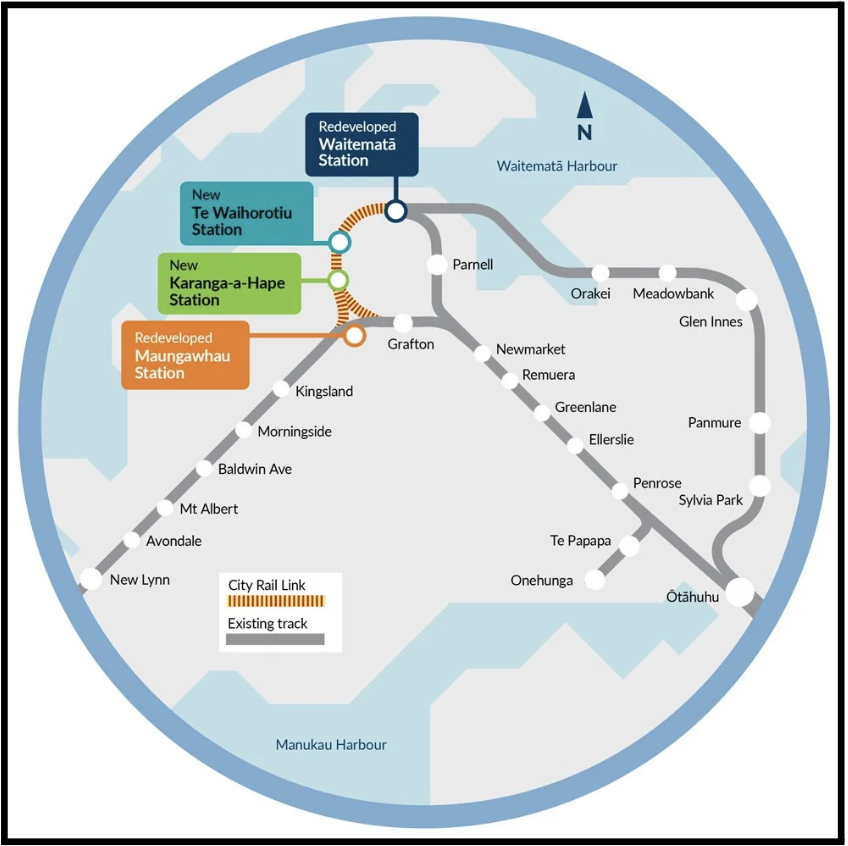
Figure 1: Map route of the CityRailLink once completed [4].
The CityRailLink is a big infrastructure project that Auckland as a whole is undertaking, consisting of a 3.5km long rail-tunnel beneath Auckland CBDthat connects Waitemata to Maungawhau station. Originally conceived to cost $2.4 billion 14 years ago, this estimate has skyrocketed to over $5 billion today. Only one question remains: who's paying for this? It is no secret that this whole project has gone off the rails, and you might be wondering why. Why is it taking this long? How did it become like this? This article will give a rundown of both public transportation as a whole and the state of Auckland's Transport system compared to how it used to be ~100 years ago.
It has to be understood that Auckland, despite being obviously car dependent, wasn’t always like this. We know how unsustainable car dependency can be, with greenhouse gas emissions, traffic congestion, traffic accidents and countless other negatives, all in all some could argue that almost nothing good comes out of cars. Trains on the other hand, in addition to public transportation in general, are the most sustainable mode of transportation ever conceived. It has been proven they have a positive impact on the environment by taking cars off the road [5]. Because trains are more space efficient than cars, fitting more people into one vehicle conserves space and frees up room on the road [6]. Moreover, their fuel economy cannot be beaten by cars, whereas car owners constantly have to worry about fuel prices fluctuating due to supply and demand [7].
And no... EVs will not be enough, because they’re still cars that contribute to traffic,
despite an increasing number of motorheads leaning towards transitioning to them [8]. The materials that make EVs also contain rare-earth minerals, which emit a lot of CO2 to mine and to process. EVs may not run on fossil fuels, but they still take up more space on the road and require a lot of unsustainable materials to manufacture .
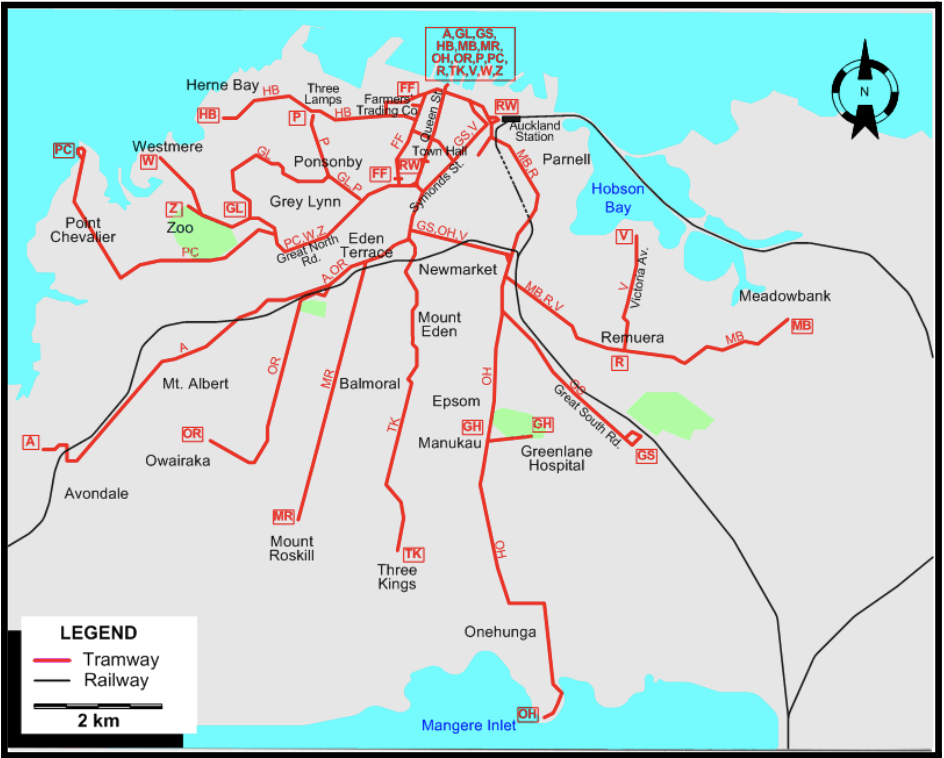
Figure 2: Map route of Auckland's old tramway system, circa 1950 [9].
Though it may not seem like it, there are plenty of alternatives to cars. Many Aucklanders have forgotten that their city used to have one of the most extensive tram systems in the world, up until the mid 20th century.
Once the envy of the world, Auckland had the first coast to coast tramway that stretched from the Waitemata and Manukau harbours, starting with a single terminal in downtown Queen Street. Here, tramlines were developed outwards, until eventually ending at Onehunga harbour [9-10]. An electric tramway system started operating in 1902, replacing the horse-drawn tramway until its closure in 1956, 70 years to today. Transportation was booming during the early 20th century. Up until WW2 in 1940, the tramway had a patronage of 60 million, outcompeting buses and trains by a wide margin [11]. This was probably the most sustainable period of Auckland's public transportation history. Due to war rationing, the tramway system reached its zenith with over 100 million patrons, but neglected maintenance and a labour shortage meant that it began to fall slowly into disrepair [9-10]. As expected, after the war ridership started to plummet immediately. Aucklanders were increasingly adopting cars, and the tram system remained in disrepair. By the 50s, a combination of low ridership and competing road space on the streets from cars reduced demand for public transit, in addition to an image problem of trams being outdated, people turned away from public transit, so it was needless to maintain the system.
Realizing rapid automobile adoption was crowding streets, Auckland grew outward through suburban low density living, never expanding its tram system alongside it. In 1956, city officials decided that it was time to shut it down for good [9-10]. They had all the infrastructure ripped up by 1960 while simultaneously pouring millions into diesel buses and developing motorways for a future that was dependent on cars [9-10]. One might look back retrospectively and think how short-sighted those officials were. Auckland today is mostly car-centric, and no longer seen as a public transport oriented city. But Auckland was a much smaller city 70 years ago, and nobody could’ve predicted that the city would grow to a population of 1.5 million today. The effects of this unsustained growth now manifest in the intense traffic jams experienced daily on our motorways [10]. With the current government pouring millions into roadway expansions in response to car dependency induced demand, this will only likely increase congestion, which roadways can never solve. Because adding lane capacity, only incentivises drivers to fill those new lanes up, ending up with the same repeated congestion. It's a losing battle [12]. How is any of this sustainable?
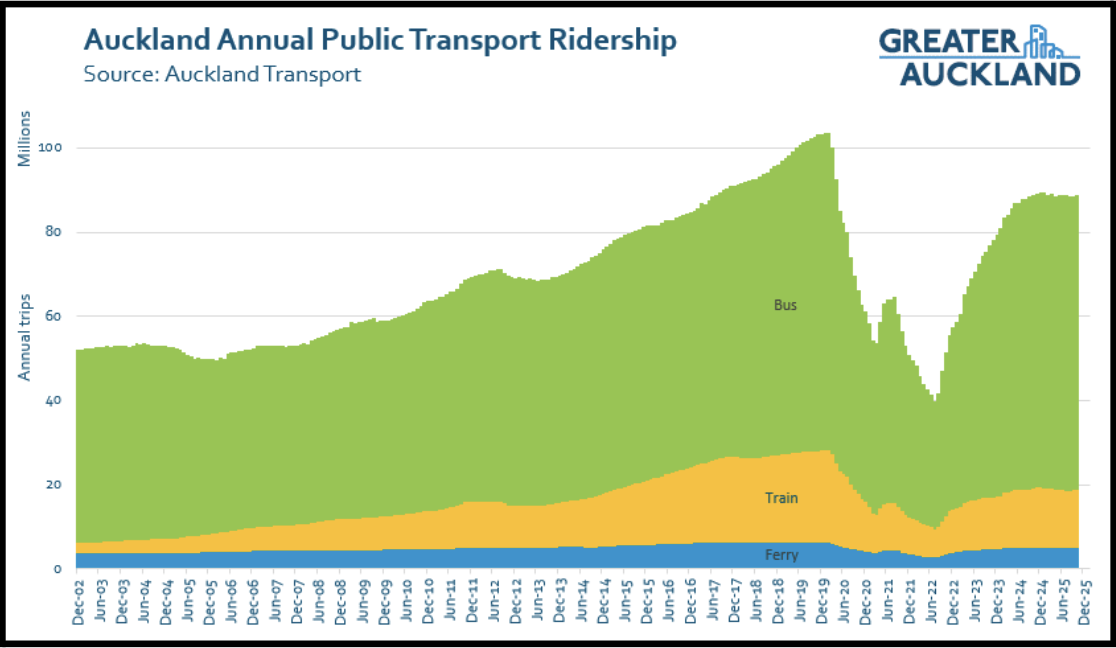
Figure 3: Auckland’s annual public transit ridership from 2002 to 2025 [13].
The idea of transitioning Auckland into a low-carbon economy is a noble one. But this cannot be achieved when most of our sustainable transportation goals are lagging far behind those of the rest of the world.On a positive note, Aucklanders are making over 80 million trips by public transit [13].However, other cities around the world are adopting sustainable public transport at an increasing rate while Auckland recently cancelled its much anticipated light rail project that would’ve connected the CBD to Mt Roskill in 2024 due to delays and cost-overruns [14]. The project should've started planning in 2023, but this never happened. The light rail project ultimately went nowhere, and without the backing of the previous Labour government, National booted it from its agenda [14]. This is an issue that will remind Aucklanders of how far we’ve declined in our ability to build major infrastructure projects on a local scale for years to come, but now all eyes are on CityRailLink with fingers-crossed just hoping it reaches the finish line. While most Aucklanders, (63% in 2012) were in favor of this project, an increasing volume of business owners from the CBD have now expressed their frustration at its slow crawl [15-16]. Businesses built around the vicinity of these new stations are disproportionately affected by the construction closures of these spaces and cannot survive such long term disruptions. The entire project comprises only 4 stations for a one way tunnel. Why are Auckland's sustainable transportation projects so consistently delayed, not happening or blowing out of budget? How can Auckland work to build our sustainable transportation infrastructure projects cost effectively and on schedule?
There are several methods that can be adopted to ensure this happens, but the most
important aspect lies in our construction industry. It’s no secret that New Zealand as a whole struggles with developing a coordinated plan to build infrastructure in a timely manner and cost-effectively. Presently, our ability to build large infrastructure projects has hit a snag [17]. Auckland used to complete large projects cost-effectively and in a shorter timespan, up until the mid 20th century with trolley buses [18]. But as a result of the hollowing out of our industrial economy, we have stopped building major infrastructure projects. We have failed to mirror anything like that of the 20th century at the same scale today. Now, we find ourselves paying a very high cost premium for any major infrastructure project, such as CityRailLink and Auckland Light Rail. What we need is a united long-term coordinate infrastructure plan, similar to sister cities like Los Angeles. Public transportation in LA is run by the LA Metro Agency and is one of the fastest expanding public transportation systems in America, with an initiative to complete 28 projects by 2028, before the LA Olympics[19]. And they’ve already got a quarter of the projects completed in a shorter span of time than it took to get CityRailLink done. So it is doable, so to accomplish this feat, most crucially they have the necessary labour set aside, proper resources acquired, an agreed timeline and a complete pipeline of projects that need to be built by a certain date [20]. Auckland cannot be doing a series of one-offs, in terms of completing construction on just one project, only to wait a multi-year delay for another. This is what New Zealand in general is doing right now, and consequently, Auckland is paying a very high cost premium for City Rail Link. There needs to be a serious debate on what major infrastructure projects should be undertaken, going forward. The city needs a long-term infrastructure pipeline containing a list of buildable public transit projects, and most importantly with approval from the entire council to ensure it comes to fruition.
Another cost-effective method is to keep building and don’t stop building. When a public transportation project such as the electrification of Auckland’s rail lines gets completed, we can’t afford to pause for many years before initiating another rail project. In addition, breaking ground on one project only to stop a few years into construction will also exacerbate cost-overruns. Because builders, engineers and planners have knowledge gained from the first project, this can logically be applied to another project shortly after the completion of the former. This has been seen in China, with their expansive high-speed rail system. 19 years ago their system wasn’t nearly this extensive, growing from 161km in 2007, to more than 47000km today [21]. It’s astonishing how much is able to be completed in such a small amount of time, if workers continue building at pace. Unfortunately, by far one of the egregious and fraught factors that adds to costs and delays is bureaucracy, or red tape. It is apparent that the New Zealand planning process is kneecapping any proper development of public transportation projects [22].Despite whatever inefficiency affecting the city’s planning commissions, nothing can be built more quickly if there’s no reform of our planning process. Removing unnecessary red tape would be life-changing, by breaking down the planning process into environmental elements for example, such as noise, disruptions, climate and space. Redundant red tape would only prolong the reviewing process for each element. In addition, freeing any projects from political interference would remove the bureaucracy and layers of review to get construction off the ground, essentially deregulation [23]. This red tape only kneecaps the city’s abilities to get projects done in a timely manner and pushes up costs. Creating years of delays and uncertainties for firms planning construction, so it’s incredibly hard for our industry to approach this efficiently, because City Rail Link relies on contractors for all design and construction. We only need to look across the Tasman at Melbourne to see what happened when they reformed their planning process over a decade ago, now getting projects like the Metro tunnel completed by 2026 as intended [24].
All in all, Auckland as a whole needs to consider the kind of sustainable public transportation it wants to build out in order for it to meet its low-carbon goals.Our current ability to develop our public transportation infrastructure is unsustainable, cost prohibitive, frustratingly slow and pushes our climate-action deadline further into the future, meaning that clear change is needed.
We cannot simply rely on the CityRailLink to solve all our climate problems. Instead we need to look at other modes of transportation that don't render our city heavily congested and choked with emissions. This reform must come from the hands of the higher ups, with the council considering a list of long term transportation projects and how they can complete these cost-effectively and on-time. I believe that the CityRailLink would be a miracle once opened. Reliable transport has a clear trickle-down effect, creating jobs by bolstering business alongside other sustainable transportation modes, like buses or light-rail. Surrounding areas around these new stations will also see an uptick in business growth due to an increase in foot traffic.
Despite 86% of people living in towns and cities, Auckland's population is forecasted to reach 2 million by 2033, a fast approaching year [25]. This would motivate developers to design more walkable and dense neighborhoods centered around transit stations. But this can only happen if we take the aforementioned steps to develop the necessary infrastructure projects. If any of these methods for future projectbuilding were adopted, Auckland would be a much more dynamic, healthy, sustainable and cleaner city than it is now. We’ve seen these methods work around the world. If we want trains running, it’s better to stop making promises and start getting things built. I believe it can and should be done.
[1]“Wayback Machine,” Archive.org, 2023.
[2] “City Rail Link,” City Rail Link, 2024.
https://web.archive.org/web/20190331204504/https://www.cityraillink.co.nz/crl-timeline
[3] “City Rail Link,” KiwiRail, 2025.
https://www.kiwirail.co.nz/our-network/our-regions/amp/supporting-city-rail-link/
[4] “Maps,” City Rail Link. https://www.cityraillink.co.nz/crl-route-maps
[5] Lucas, C. (2011, August 10). Trains taking trucks, cars off the road. The Age.
[6] Benefits of Public Transport: Train Vs Car | Grand Central Rail. (2025). Grandcentralrail.Com. https://www.grandcentralrail.com/blog/benefits-of-public-transport-train-vs-car
[7] Transport for NSW, “Why is rail travel a better choice for the environment? | Transport for NSW,” Nsw.gov.au, Jun. 05, 2017. https://www.transport.nsw.gov.au/projects/environment-and-safety/sydney-trains-environment-and-sustainability/why-rail-travel-a
[8] The Green Shot, “Train vs Car: The Real Environmental Impact Revealed,”
TheGreenShot, Oct. 17, 2025. https://www.thegreenshot.io/uncategorized/train-vs-car/
[9] “Auckland 1950,” Tundria.com, 2026.
http://www.tundria.com/trams/NZL/Auckland-1950.shtml
[10] T. Wright, “The trams that could’ve stopped Auckland’s traffic nightmare,” Stuff, Jan. 24, 2018. https://www.stuff.co.nz/nz-news/350578522/the-trams-that-could-ve-stopped-auckland-s-traffic-nightmare
[11] M. L, “Auckland’s Historic PT Patronage - Greater Auckland,” Greater Auckland, May 08, 2013. https://www.greaterauckland.org.nz/2013/05/09/aucklands-historic-pt-patronage/
[12] “New Zealand’s big national roads plan | New Zealand Infrastructure Review,” New
Zealand Infrastructure Review, Jul. 09, 2024.
https://nzinfrastructure.nz/new-zealands-big-national-roads-plan/
[13] M. L, “2025 Public Transport Ridership Update - Greater Auckland,” Greater Auckland, Nov. 23, 2025.
https://www.greaterauckland.org.nz/2025/11/24/2025-public-transport-ridership-update/
[14] “Government cancels Auckland Light Rail | Beehive.govt.nz,”

Derek is currently studying a Bachelor of Science in geography at the University of Auckland, with an interest in the physical and natural world. He is studying ways that processes and patterns change over time throughout Earth’s environments and how they shape the world we live in today.