
Saltwater Intrusion: Computational Approaches
Hydrogeology and Mathematical Modelling| Aimee Lew
An aquifer is a layer of porous rock that holds water. They are natural reservoirs for groundwater, which is the world’s oldest and most widely used source of drinking water [1]. When aquifers contact seas or oceans, saltwater flows in and contaminates the groundwater. The salinity, or salt concentration, of seawater is taken to be 3.5% or 35 grams of salt per kilogram of water [2]. While there is no standard safety threshold of salinity in drinking water [3], human blood sodium content is maintained around 135-145 mmol/L [4]. This corresponds to approximately 0.9% sodium chloride. This forms a proxy threshold at approximately a quarter of 3.5%. Hence, consuming groundwater can become harmful if the aquifer contains highly saline water [3]. For some Pacific Island countries like Niue and Tonga with irregular rainfall and few surface lakes and rivers, groundwater is the only major source of freshwater [1]. In addition to human freshwater needs, saline groundwater also adversely affects agriculture, industry and local freshwater ecosystems.
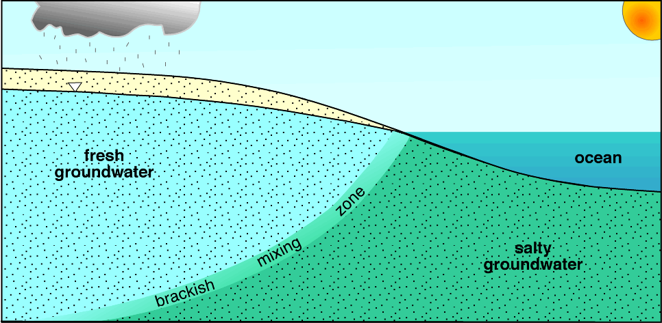
Figure 1: Diagram of a coastal aquifer [5].

Figure 2: Island in French Polynesia [8].
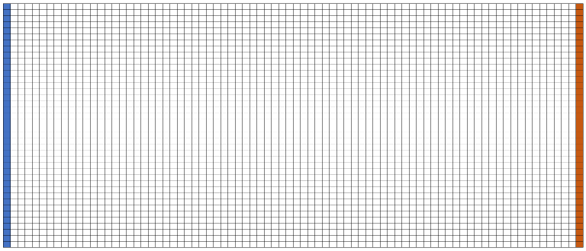
Figure 3: 80 cell × 40 cell discretisation of the Henry problem domain. Blue represents freshwater and red represents the sea boundary.
Results
Benchmarking was done in comparison to the MODFLOW 6 model of the Henry problem [11]. MODFLOW 6 is an industry-standard fluid flow simulator maintained by the US Geological Survey [12]. Figure 4 shows the time evolution of my standard Henry problem model. Saltwater enters the domain from the right and forms an intruding wedge shape in the bottom right corner. The wedge arises as saltwater is denser than freshwater, so incoming seawater sinks while the more buoyant freshwater sits atop it.
A modified version of the Henry problem was implemented in MODFLOW 6 wherein the recharge rate was halved to increase the importance of density-driven effects. This corresponds to halving the boundary flux parameter qin applied at the left wall of the domain. The results for the low-inflow Henry problem are shown in Figure 5.
The final frames of my standard and low-inflow Henry problem models were compared to the final frames of the MODFLOW 6 models in Figure 6 and 7. The concentration contours and the position of the saltwater wedge show good agreement with the MODFLOW 6 results. This verifies the governing equations and underlying physics were correctly implemented in FEniCS. Improvements on the model realism can now be made by changing the physical parameters and the topology of the domain to simulate real settings.
Figure 4: Time evolution of the standard Henry problem. The contour lines show (from left to right) 1%, 10%, 50%, 90% and 99% of seawater concentration; or equivalently 0.35, 3.5, 17.5, 31.5, and 34.65mmol/L.
Glossary
Finite Element Method: a method of solving physical problems by breaking a continuous problem domain into small elements, and approximating solutions over these elements
Partial differential equation: differential equations which involve more than one independent variable
Variational form: an integral representation of differential equations required for the Finite Element Method
Aquifers recharge themselves from rainfall and surface sources like lakes and rivers [6]. As climate change alters weather patterns, the natural recharge cycles of aquifers are disrupted. Sea level rise can carry saltwater further inland, speeding up saltwater intrusion. Meanwhile, the need for freshwater is growing around the world–with population growth, urbanisation, industrialisation and rising living standards working to drive up demand [1]. Over-extracting from aquifers dramatically reduces the freshwater volume and ‘sucks in’ seawater, accelerating saltwater intrusion. This combination of environmental (recharge processes, sea level rise) and anthropogenic (well pumping) factors produces a rich landscape of scenarios which can be modelled. The effect of existing water resource management strategies like pumping regulations, barrier wells and artificial recharge are already being investigated in specific Pacific Island contexts like Vanuatu [7].x
Methods
Computational Modelling
The equations governing fluid flow problems are called partial differential equations (PDEs). Only in a handful of cases can PDEs be solved analytically, so numerical methods are required to find solutions. Across industry and academia, there exists a wide class of software packages and numerical solvers for fluid flow problems. FEniCS (Finite Element Computational Software) is a PDE solver that implements the Finite Element Method [9]. It is an open source platform that takes the variational form of the PDEs of interest and outputs solutions. FEniCS is therefore a flexible option for solving fluid flow and other physical problems.
Two quantities are being solved for: hydraulic head and concentration. In hydrology, hydraulic head is a measure of the energy in a body of water. Water flows from regions of high head to regions of low head, just like how (you may have heard) it flows from regions of high pressure to regions of low pressure. Hydraulic head contains the aforementioned pressure component alongside contributions from gravity and fluid velocity. The variational form with test function w of the hydraulic head h used in the modelling is:
The salt concentration is governed by two processes: advection—salt carried by moving fluids—and diffusion—salt passively moving along concentration gradients. The variational form with test function u of the concentration c is:
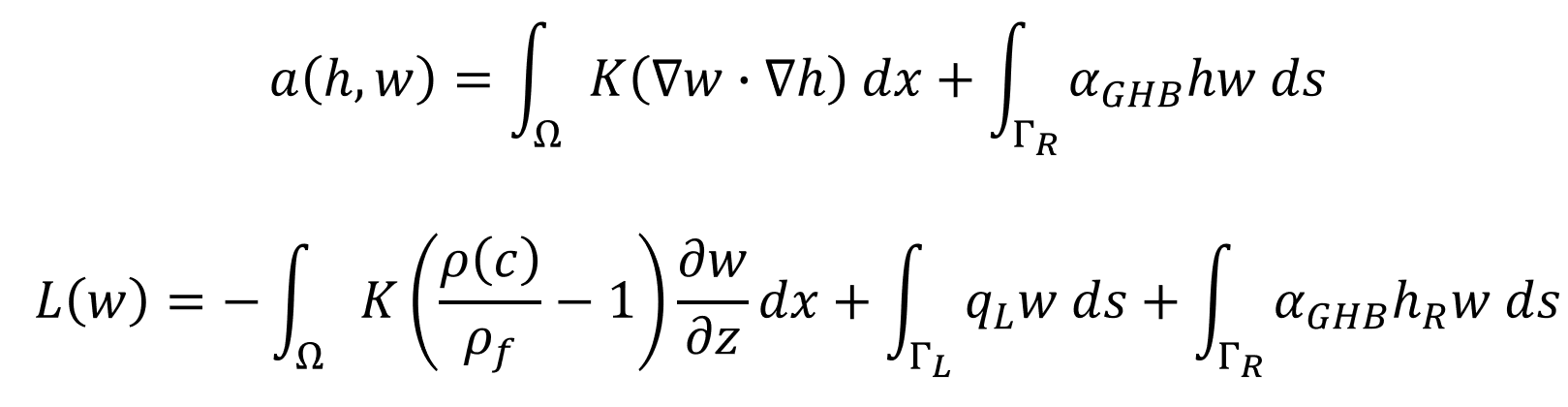
Equation 1: Hydraulic Head .
Model Parameters
The governing equations include parameters that represent properties of the rock, water, or domain. I have chosen the model parameters to match the classic Henry problem from 1964 [10].
Equation 2: Salt Concentration
Table 1: Physical Parameters.
Figure 6: MODFLOW 6 model of the standard Henry problem (left) and my model (right).
Freshwater flows through the left side of a porous 2m × 1m rectangular domain. The domain represents a layer of rock in the subsurface. The freshwater inflow on the left represents the recharge rate of the aquifer. The right side is open to seawater. The Henry problem is a standard benchmarking test for variable-density flow simulators and thus previous simulation results are widely available for comparison. This test confirms the validity of my governing equations and modelling. After benchmarking, parameters and domains can be changed to match specific real-world hydrogeologies.
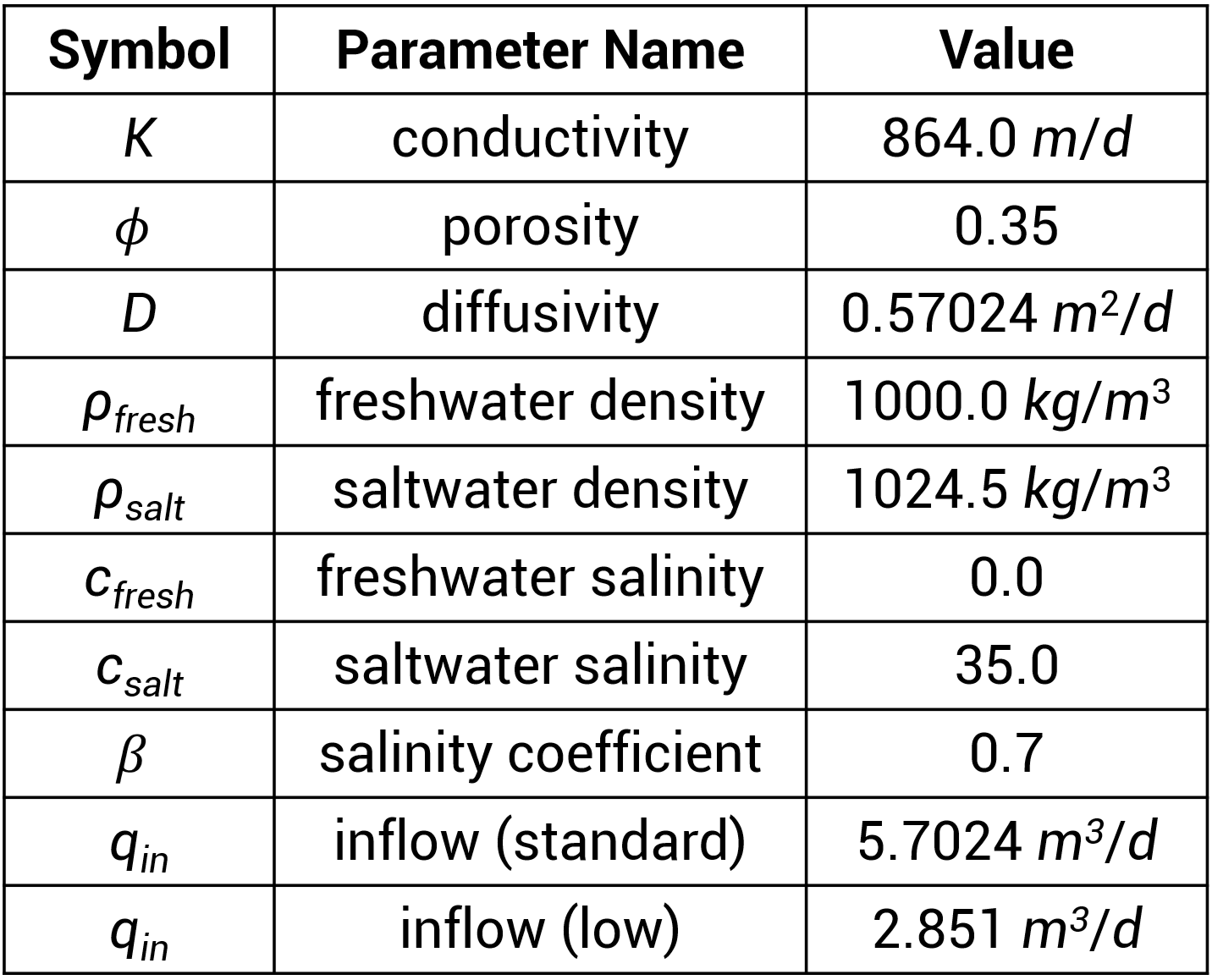
Table 1: Physical Parameters.
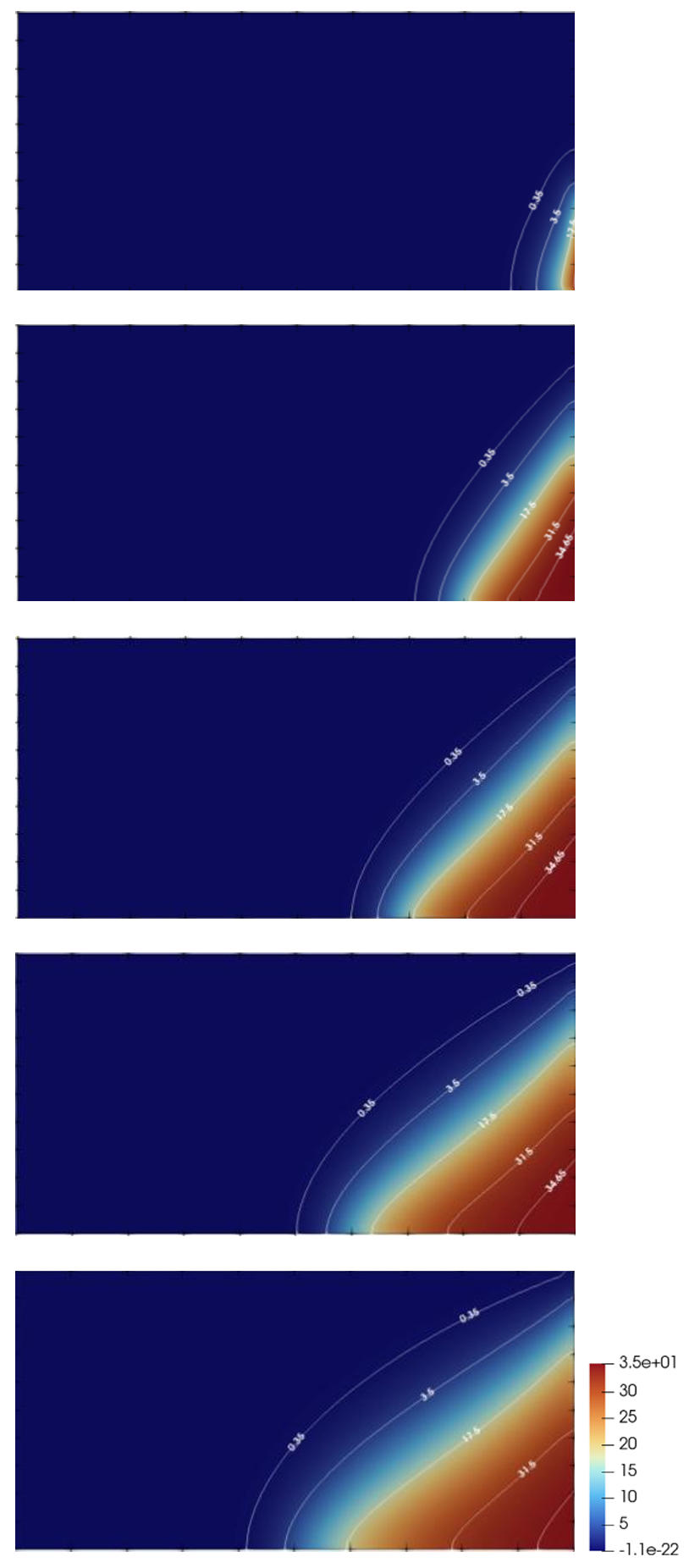
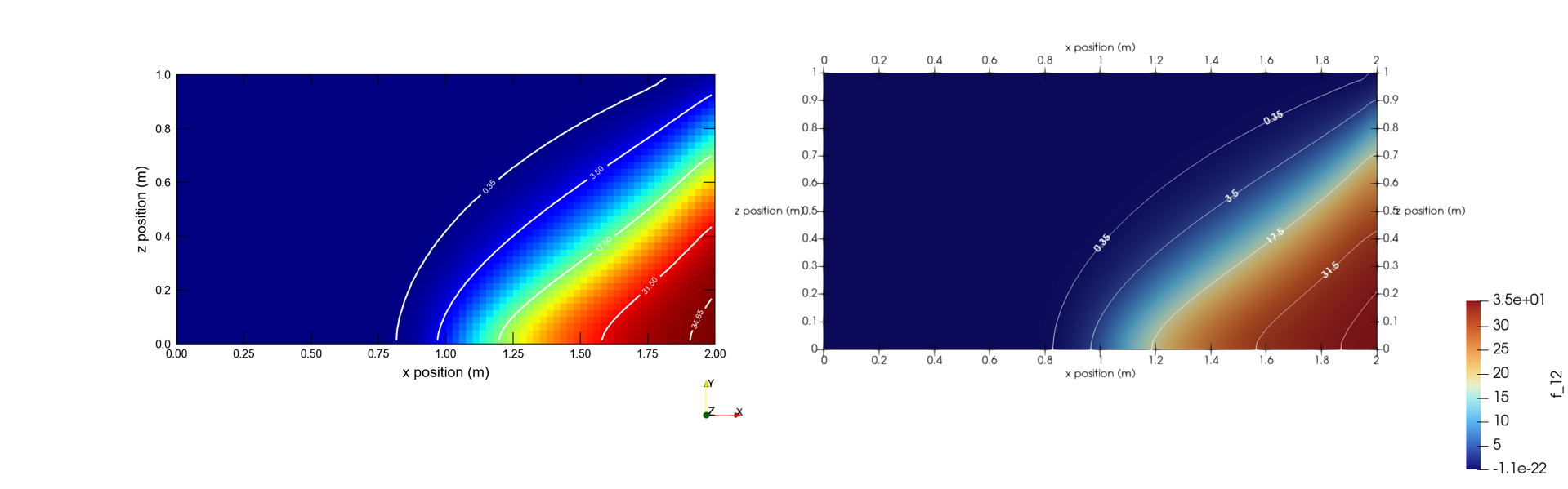
Figure 5: Time evolution of the low-inflow variation on the Henry problem. The contour lines show (from left to right) 1%, 10%, 50%, 90% and 99% of seawater concentration; or equivalently 0.35, 3.5, 17.5, 31.5, and 34.65mmol/L.
Figure 7: MODFLOW 6 model of the low-inflow Henry problem (left) and my model (right).
Next steps in my research project include quantifying the differences between my preliminary model and the MODFLOW 6 model in terms of final freshwater volumes, concentration contour profiles, and the position of the saltwater wedge at termination; investigating the effects of model parameters, specifically the diffusion constant, the inflow rate, and domain dimensions; and establishing a real world model of an atoll or island setting—potentially in another flow simulator, Waiwera, which is equipped to support large-scale modelling [13].
Conclusion
Saltwater intrusion raises concern as climate change and growing demands on freshwater threaten water security in the Pacific. The extent of saltwater intrusion is determined by both environmental and anthropogenic factors, so models must incorporate an array of parameters and physical processes. Computational packages exist to expedite the modelling process. I have built a preliminary model in FEniCS which successfully passed benchmarking against results from an industry standard package, MODFLOW 6. Accurate and timely modelling is used to test different water resourcement management policies and prepare for a host of future scenarios, thus supporting solutions which impact the lives of thousands.
[1] A. Sharan, A. Lal, and B. Datta, “A review of groundwater sustainability crisis in the Pacific Island countries: Challenges and solutions,” Journal of Hydrology, vol. 603, p. 127165, Dec. 2021, doi: https://doi.org/10.1016/j.jhydrol.2021.127165.
[2] R. Pawlowicz, “Key Physical Variables in the Ocean: Temperature, Salinity, and Density | Learn Science at Scitable,” Nature.com, 2013.
[3] E. Costopoulos et al., “Adverse health outcomes associated with drinking highly saline water: a systematic review,” European Journal of Epidemiology, vol. 40, no. 11, pp. 1307–1322, Sep. 2025, doi: https://doi.org/10.1007/s10654-025-01307-9.
[4] M. Peruzzo et al., “Body fluids and salt metabolism - Part II,” Italian Journal of Pediatrics, vol. 36, no. 1, p. 78, 2010, doi: https://doi.org/10.1186/1824-7288-36-78.
[5] Columbia University, Coastal aquifer. Accessed: Mar. 22, 2026. [Online]. Available: https://www.columbia.edu/~vjd1/groundwater_basics.htm
[6] C. R. Fitts, Groundwater science. Oxford ; New York: Academic Press, 2013.
[7] A. Sharan, B. Datta, A. Lal, and K. K. Kotra, “Management of saltwater intrusion using 3D numerical modelling: a first for Pacific Island country of Vanuatu,” Environmental Monitoring and Assessment, vol. 196, no. 2, Jan. 2024, doi: https://doi.org/10.1007/s10661-023-12245-y.
[8] J. Silver, White and red boat on beach during daytime. 2017. Accessed: Mar. 22, 2026. [Online]. Available: https://pixabay.com/photos/polynesia-french-polynesia-tahiti-3021072/
[9] “FEniCS Project,” FEniCS Project. https://fenicsproject.org/
[10] H. R. Henry, “Effects of dispersion on salt encroachment in coastal aquifers,” 1964.
[11] “53. Henry Problem — MODFLOW 6 Examples documentation,” Readthedocs.io, 2020. https://modflow6-examples.readthedocs.io/en/latest/_examples/ex-gwt-henry.html
[12] USGS, “MODFLOW 6: USGS Modular Hydrologic Model,” Usgs.gov, Mar. 11, 2019. https://www.usgs.gov/software/modflow-6-usgs-modular-hydrologic-model
[13] A. Croucher, “Waiwera,” Readthedocs.io, 2017. https://waiwera.readthedocs.io/en/latest/

Aimee is a final-year Masters student, researching saltwater intrusion into coastal aquifers in the Pacific Islands. Her undergraduate background was in Physics and Politics & International Relations. Outside of academics and serving as the Creative Director of UoA Scientific, she enjoys reading, arts and crafts, and travelling.