
Curiosity Without the Commute: Rethinking Research in Rural Aotearoa
Rural Research | Lucy Schultz
Science, Before It Had a Name
Winter doesn’t really announce itself at home anymore. It just sort of… doesn’t happen.
I still brace for frosts with two layers of socks, but they no longer arrive reliably. Before winter has thought about settling in, spring lambs are already out in the paddocks. It’s something everyone notices. My grandparents’ plum trees often flower heavily, usually meaning a harvest too big for them alone, with fruit ending up being shared around at their church. These observations come up casually, while pulling weeds or leaning on a fence–no graphs or data sheets required.
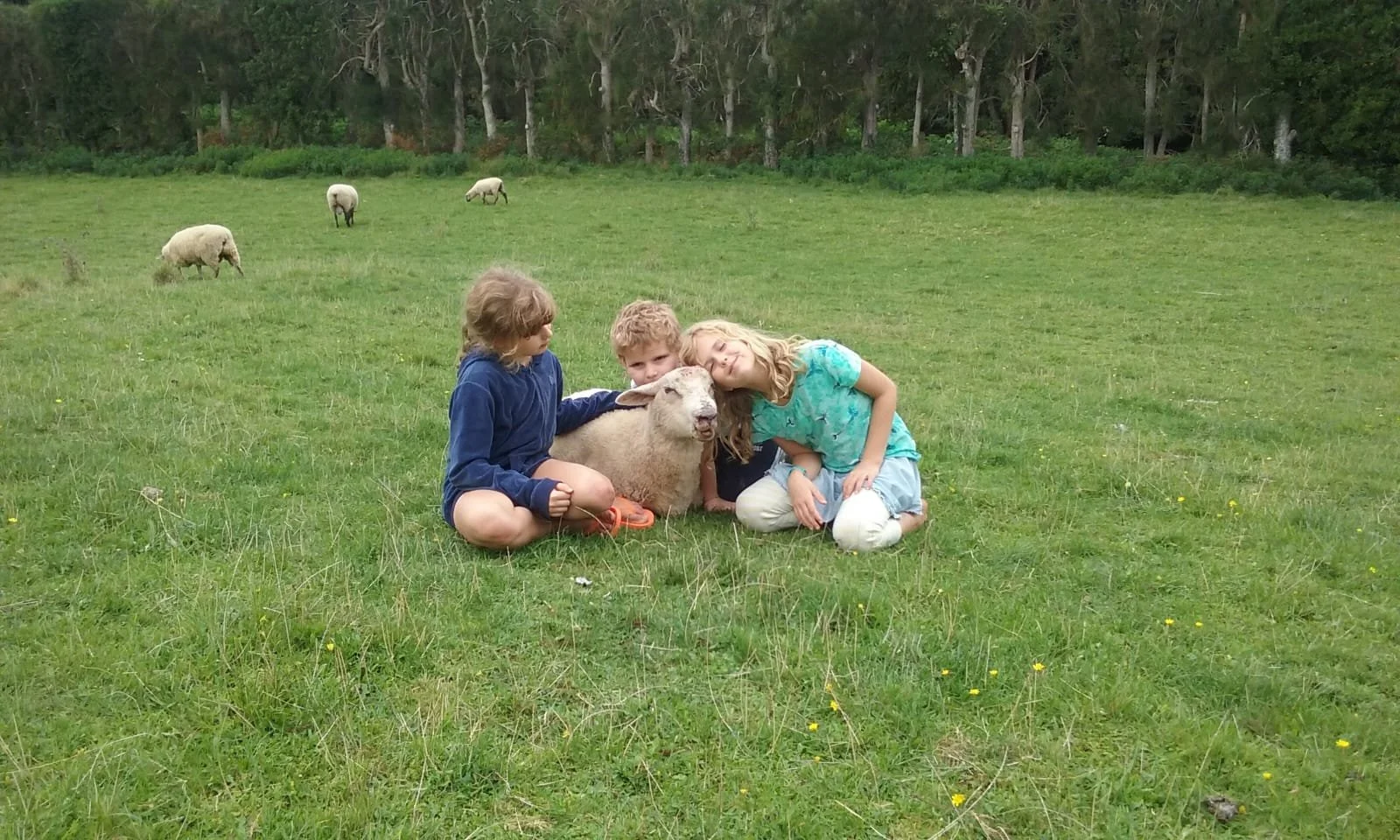
Figure 1: Childhood photo of me and my siblings with some of our sheep.
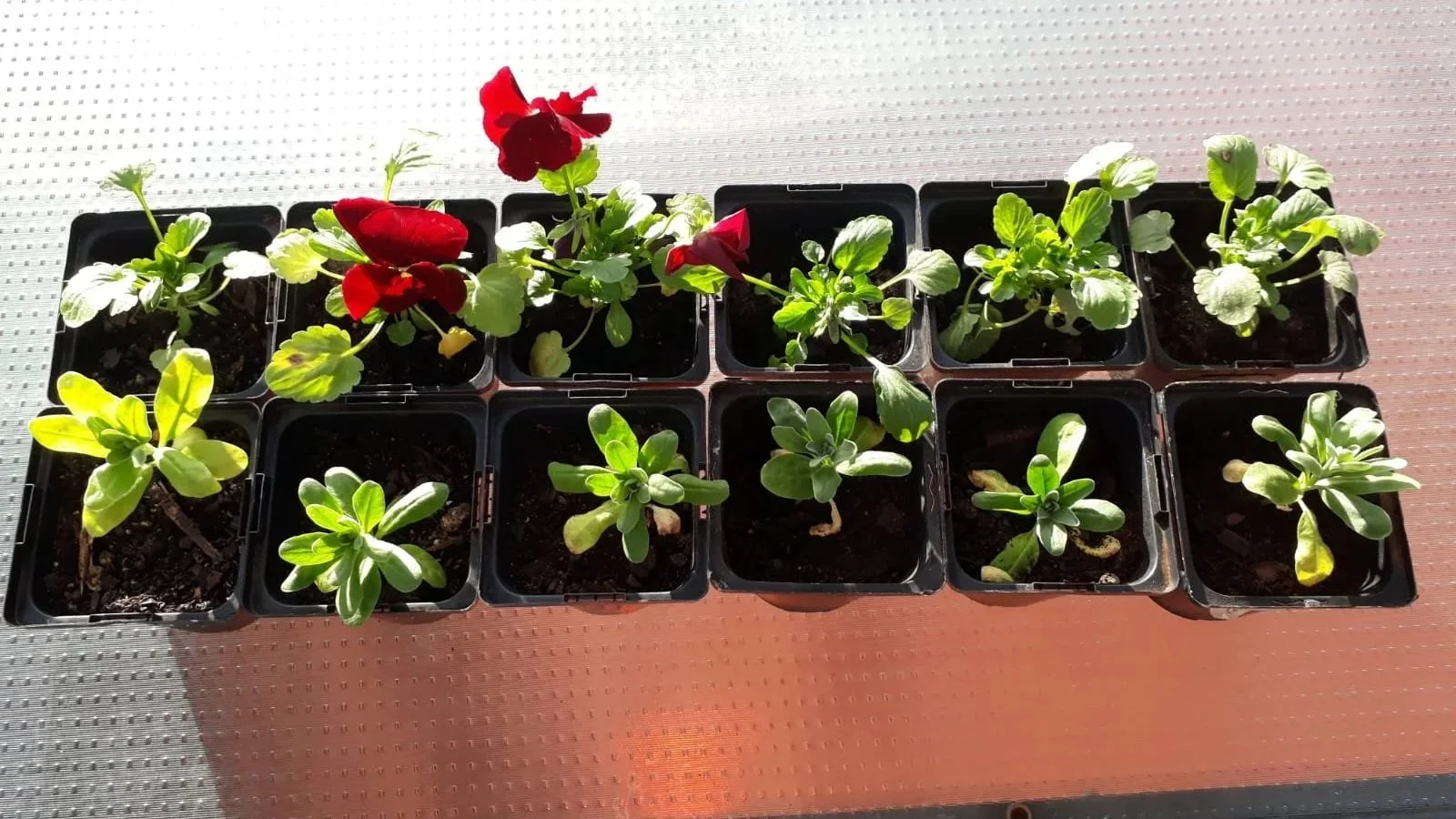
Figure 2: My first complete science project at the 2018 science fair. Testing coffee grounds as enrichment for plant growth, an early home experiment that further sparked my curiosity in research.
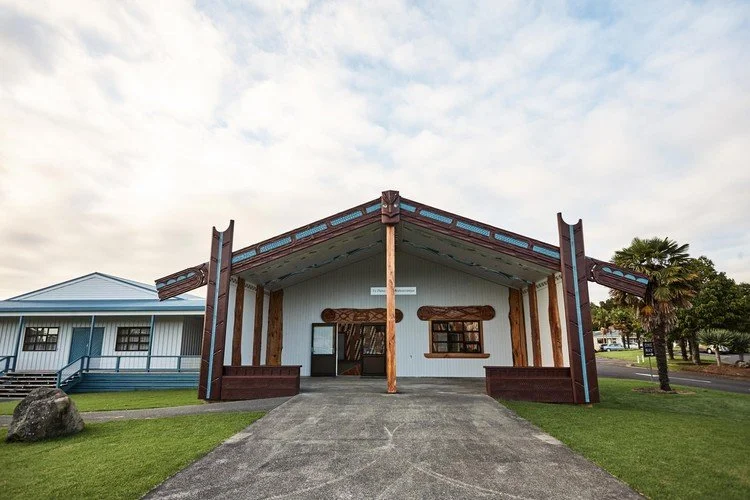
Figure 3: Te Puna o Te Mātauranga marae, Whangārei. A contemporary Māori meeting complex at NorthTec Raumanga campus, used for cultural events, learning workshops, and community gatherings [4].
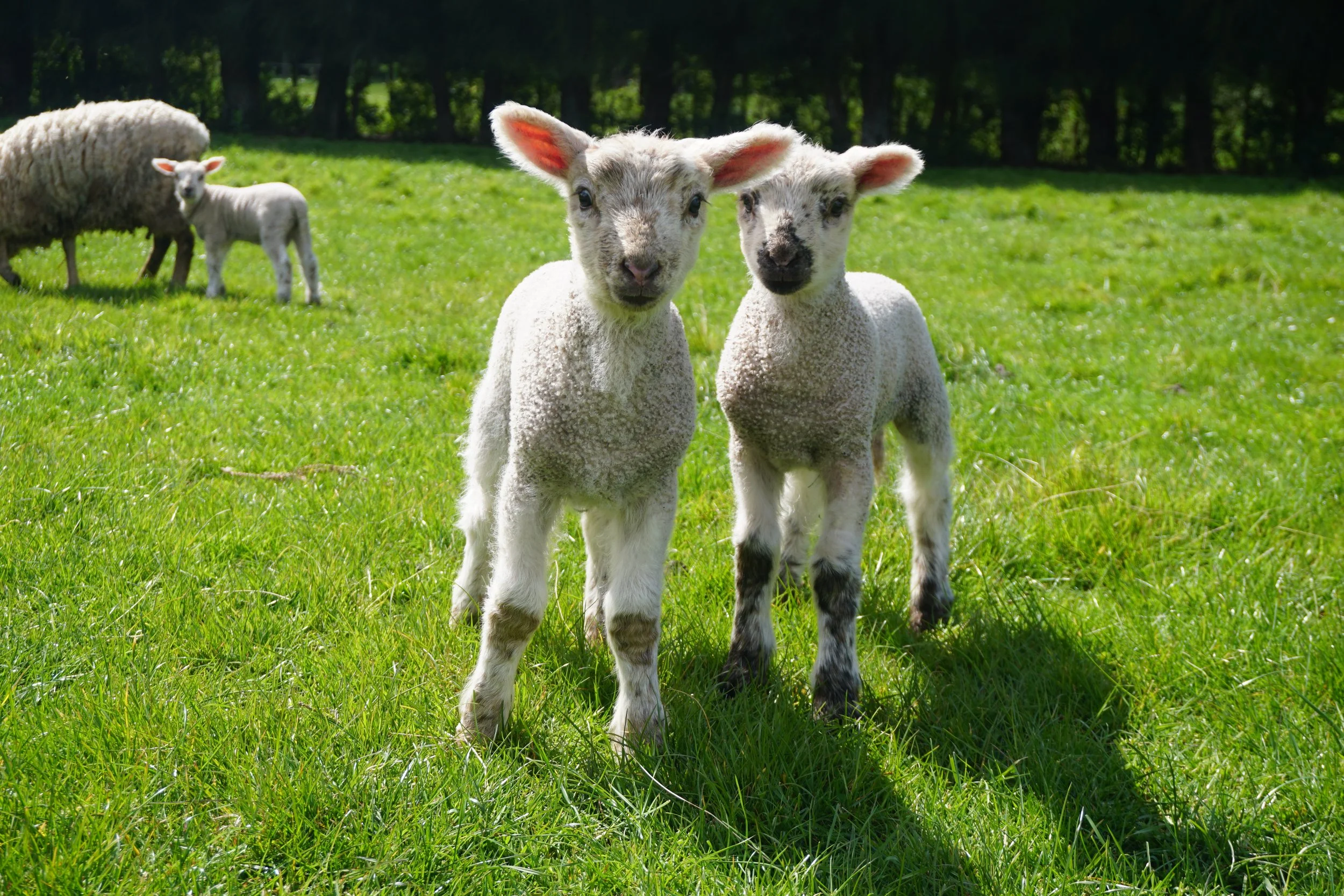
FigurFigure 4: Two spring lambs from my grandparents’ farm in Whangārei that reflect the rhythms of farm life.
Oral histories and local knowledge
Ask your Nan how the creek used to run, when farming practices shifted, or how the bush has changed over decades. When patterns appear across stories, that’s research too, just shared through yarns instead of spreadsheets.
None of this needs expensive equipment to begin. It needs consent, curiosity, and patience. Formal write-ups can come later (or not at all). Either way, noticing is where rural research starts.
Small changes in how research is structured could make a big difference. Remote mentorship that doesn’t assume relocation, recognition of place-based projects, and support models that work alongside communities. This isn’t about “bringing” science to rural places. It’s about making space for the science that’s already there.
Staying curious, staying home (or coming back)
Less frosts are a small detail, but they’re the kind of thing people notice, talk about, and remember. Paying attention to these things matters, not just scientifically, but socially, and it’s the habit of noticing that university hasn’t pulled me away from home. If anything, it deepened my connection to it, giving me the tools and language to see that research doesn’t only happen near campuses or inside labs. It happens wherever people are paying attention, asking questions, and taking care of place.
Rural research doesn’t need to be invented or imported. It already exists in backyards and community spaces and it deserves to be recognised and supported as research in its own right. Sometimes all it takes to start is noticing what’s been there all along.
Glossary
Awa: River or waterway.
Hui: A gathering or meeting, often used for discussion, decision-making, and sharing knowledge within communities.
Mana o te Wai: A framework that recognises the importance of water and prioritises its health and wellbeing, placing water at the centre of decision-making.
Mātauranga Māori: Māori knowledge originating from relationships with ancestors and the environment including Māori world view and cultural practices.
Rural: Areas outside urban centres, including rural settlements and other low-density land, as defined by Stats NZ.
Wāirepo: Wetlands; ecosystems that play an important role in biodiversity, water quality, and flood control.
But what university gave me wasn’t the ability to notice these scientific phenomena, but the vocabulary to describe them. Bud dormancy, circadian rhythms. Terms that look neat on paper, but don’t change the fact that back home, these patterns have always been part of everyday conversation. Noticed, compared, remembered, and logged in people’s heads, long before any formal system got involved.
That’s where rural research starts. Not in a lab, but in a place where curiosity has always existed. So what does “doing research” look like when the closest lab is an hours away commute?
More Than Just Labs and Lab Coats
When people think of “research,” they often picture labs, equipment, supervisors, and summer scholarships. That’s one version of research, and it works well for many students. But these opportunities are often built with proximity in mind.
Rural research doesn’t usually begin in a lab. It starts with what’s already there, land, waterways, animals, people, and long memories. It has to fit around local infrastructure and the rhythms of the community. Rather than replicating city-based models, rural research often blends scientific observation with local knowledge and mātauranga Māori, alongside a patience for patterns that only emerge over years or generations [1].
None of this limits the impact of research–rather, it often leads to research questions that are more connected to place and to the community who live there.
Taking University Home (or Not Quite)
I didn’t have access to a lab at my high school. No pipettes, no centrifuges, and definitely no clue what “running a gel” meant. Walking into my first university lab was deeply unfamiliar. Everyone else seemed to know where to stand, what to grab, and how to do basic procedures. Meanwhile, I spent my first few weeks accidentally ejecting pipette tips instead of the reagents within them.
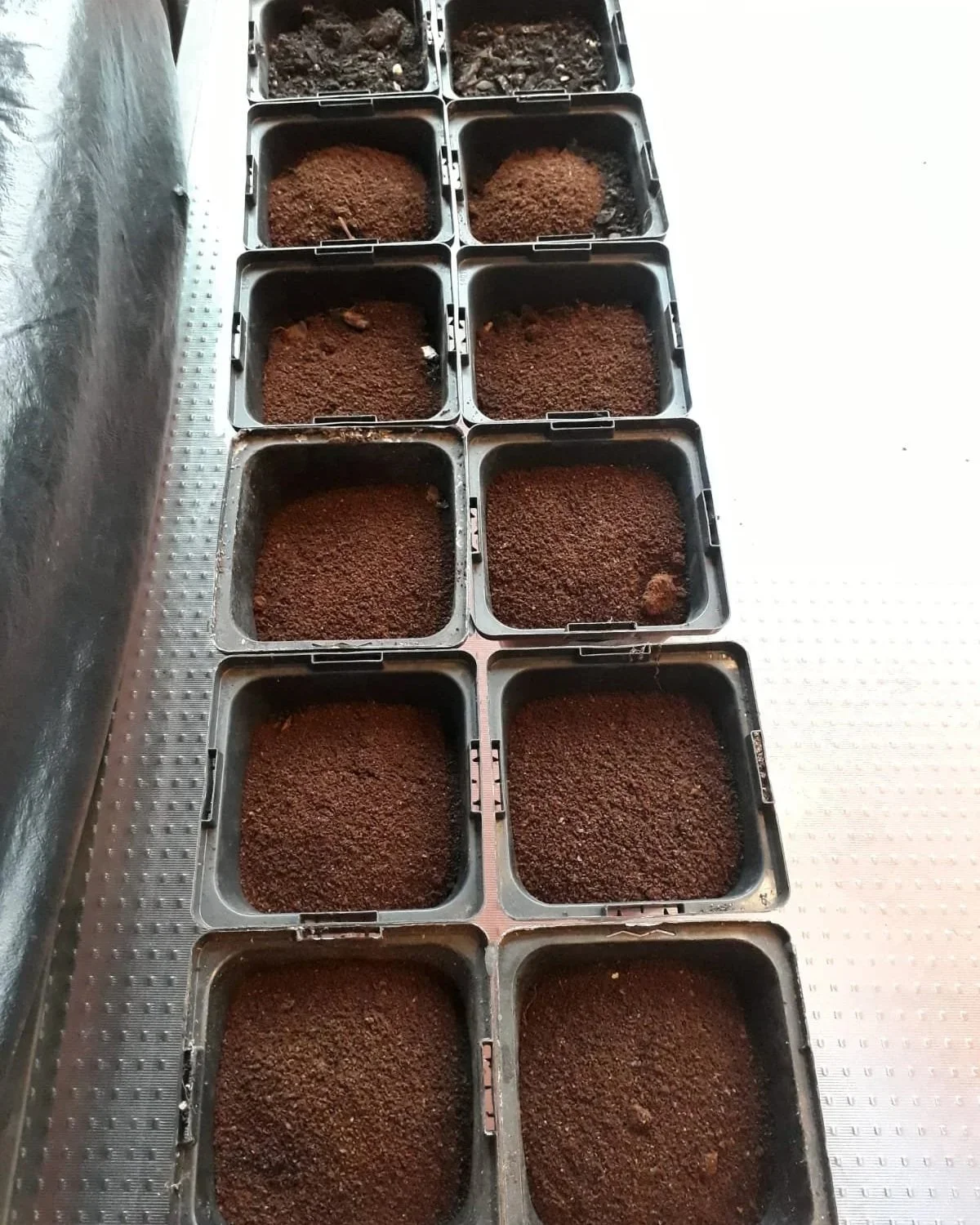
Lab by lab, I slowly figured it out. Pipetting without bubbles, mixing reagents in the right order, waiting for reactions to behave themselves. Science became hands-on, practical, and occasionally messy. It stopped being something that only existed in textbooks.
But alongside that learning curve, another difference became obvious. The tools I was using every week simply didn’t exist back home. And beyond equipment, there was also a difference in format. University research is written, peer-reviewed, and archived whereas back home, knowledge is shared orally, through conversation, comparison and story. Both systems hold value, but they don’t always translate easily, and moving between them can feel like switching between languages mid-sentence.
University opens up a huge range of possibilities, but it also highlights a reality many rural students live with: some scientific questions are much easier to pursue if you’re able to move away from home.
At the Edges of Our Own Data
Often rural communities sit at the edges of research without always being part of shaping it, even when their places and lives are the starting point for the questions being asked. Data is frequently gathered in rural settings, while analysis, interpretation, and planning tend to take place elsewhere [2]. What returns to the community is often highly technical and removed from the settings it came from.
That matters, because how research is shared shapes who can actually use it. Research is typically returned as journal articles, reports, or presentations designed for academic audiences [3]. At home, knowledge moves through town-hall meetings, Facebook groups, local hui, and everyday discussion. When findings don’t arrive in those spaces, the result isn’t just a missed perspective, it’s context that gets flattened.
Real and Rural Research
Rural communities aren’t waiting to be included in research. In reality, they’ve been leading it for years.
Across Aotearoa, whānau, hapū, and iwi are running long-term environmental monitoring projects that blend mātauranga Māori with scientific tools, producing important local impacts. In Northland, the Haititaimarangai Marae Trust in Te Hiku o te Ika is building baseline ecological data for six local awa using eDNA to understand waterway health as part of their Mana o te Wai project with wānanga that bring whānau into the process [5]. Groups like Te Wairua o te Moananui (Ocean Spirit) are doing similar work in wāirepo (wetlands) to track biodiversity before and after restoration, combining whānau knowledge with systematic monitoring [5].
Projects such as Tiakina ngā Tini Taonga o Tatou Awaawa, coordinated by Ngā Kaitiaki o Ngā Kai Māori (KNONKM), which samples 16 hapori wai sites to extend understanding of waterways significant to hapū and support decisions on restoration actions, from fencing and planting to fish surveys [5]. Supported by funding streams like the Te Mana o te Wai Fund, these initiatives generate data that feeds directly into regional planning and policy conversations [6].
These projects are long‑running, relational, and centred around place, designed by and for the communities who live alongside the ecosystems they care about. They show that research doesn’t require a city, it requires time, trust, and taking local knowledge seriously.
Science in Your Socks
Doing research in a rural setting doesn’t mean waiting for a lab door to swing open. It often means starting where you are, with whatever’s around you. Think of it as “science in your socks”: paying attention to the world while you’re still standing in it.
Environmental noticing
Keep an eye on the early lambs, the flowers that pop up before you’ve finished your coffee, or how the water in the stream changes after a heavy rain. These observations are probably already happening without even thinking about it. Jotting them down is the first step toward turning everyday curiosity into data.
[1] AgResearch, “Resilient Rural Communities,” 2024. Accessed: Jan. 12, 2026. [Online]. Available: https://www.agresearch.co.nz/our-research/resilient-rural-communities/
[2] Manaaki Whenua –Landcare Research, “Survey of Rural Decision Makers,” 2023. Accessed: Jan. 12, 2026. [Online]. Available: https://www.landcareresearch.co.nz/discover-our-research/environment/sustainable-society-and-policy/survey-of-rural-decision-makers/srdm-2023/key-results-sheet-2-sources-of-advice
[3] Oxford University Press, “Why research needs to be published in new and accessible formats,” *Library Journal*. Accessed: Jan. 12, 2026. [Online]. Available: https://www.libraryjournal.com/story/why-research-needs-to-be-published-in-new-and-accessible-formats
[4] Eventfinda, “Te Puna o Te Mātauranga, Whangārei,” Eventfinda Venue. Accessed: Jan. 15, 2026. [Online]. Available: https://www.eventfinda.co.nz/venue/te-puna-te-matauranga-whangarei
[5] New Zealand Environmental Protection Authority (EPA). “Projects –how community groups are using eDNA.” Open Waters Aotearoa. 2026. Accessed: Jan. 15, 2026. [Online]. Available: https://www.epa.govt.nz/community-involvement/open-waters-aotearoa/community-groups/#Haiti.
[6] Ministry for the Environment, “Te Mana o te Wai Fund,” New Zealand Government, 2024. Accessed: Jan. 15, 2026. [Online]. Available: https://environment.govt.nz/what-you-can-do/funding/resources-for-seekers-of-environmental-funding/te-mana-o-te-wai-fund/

Lucy is a BSc student specialising in Biochemistry and Cell Biology at the University of Auckland. With roots in Northland, she combines lab-based science with an interest in local ecosystems and communities, exploring how curiosity, observation, and place shape understanding.