
Reconnecting with Nature
Technology and Nature | Rachel Song
With the rise in technology and the fast pace of the developing world, children and adults alike find themselves spending less time doing nature-related activities such as hiking and walking, and more time in front of a screen. Although this may sound harsh, it has become the reality of many individuals, as they look out the window on a bright and sunny day to find themselves stuck inside in the middle of a test, yearning to go outside. This separation from nature is not necessarily a choice, but a condition that has become a norm as society switches from immersion in nature to a world of technology and urbanisation. Technology has brought about convenience that allows its users to stay in the comfort of their home to conduct activities that would otherwise be done outdoors. This shift is the main culprit for the disconnect that is being experienced by many around the world right now. However, this does not have to be the reality. With simple but intentional shifts in habits, nature can be brought back into our lives and restore the physical and mental supports that come with reconnection with the natural world.
Digital Convenience
One of the biggest drivers of this disconnect is the growing convenience of technology. Moving from physical stores to online shops, weekend meetups to video calls, and in-person lectures to online recordings all remove the need to ever step outside [1], [2]. For students, this has become even more apparent as they choose to stay at home and watch lectures rather than attend classes on campus, particularly post-pandemic [3]. Readings and notes have also switched from physical paper to now-preferred digital copies [4]. This is further amplified as technology outcompetes nature for our attention. There is a decline in direct experiences in nature as people turn to social media, which constantly holds our attention via notifications and affects our neurobiological systems by creating a dependency similar to addiction. This changes our brain’s reward systems as well as emotional regulation and attention spans [5]. As a result, despite the potential advantages technology can bring (e.g., ease of communication or enhanced learning), excessive use can also have negative effects, particularly in children, in terms of physical and mental health, as less time is spent socialising, playing, and exercising in outdoor and natural environments [6], [7]. This can result in emotional, behavioural, and sleep issues, as well as increased psychological stress [7].
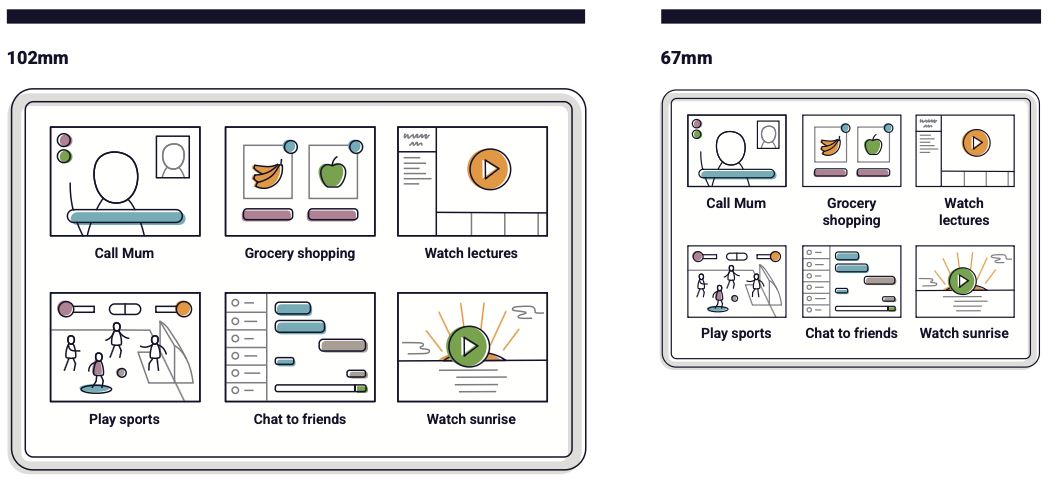
Figure 1: Digital convenience is replacing opportunities to connect with other people and with nature
Growing Urbanisation and the Green Gap
While technology is a major issue that shapes our daily lives, the physical structures and environments an individual immerses themselves in also play a major role in our access to nature. Urban growth has been accelerating at rapid rates around the globe, with about 57% of the global population currently living in urban spaces, rising to 68% by 2030; urban areas will dominate, creating pressures for housing, infrastructure, and public services [8]. Not only does it take away from natural ecosystems by fragmenting and degrading these habitats, but it also has negative effects on the local biodiversity [9]. Green spaces are unequally distributed, driven by deep-seated inequality [10]. They play a role in reducing urban heat, air pollution, and noise exposure and have been shown to improve physical and mental health through access and contact [10]. In Auckland, people living in deprived areas visit local parks less than those in more privileged areas, and although the reason is not fully clear, it is likely due to several factors such as overcrowding, lack of appeal, lack of maintenance, and safety. Hence, there is a preference to travel further to use parks that are more suitable [11]. This, however, takes time, resources, and effort, which could be solved if parks within these areas were well maintained and designed to cater towards local needs. This is known as a green gap [11].
Simple Ways to Reconnect
However, not all hope may be lost, as despite a reduction in nature interaction, people can bring these experiences to themselves in several ways. The first is using biophilic design within our infrastructure, incorporating natural elements that create a human-nature connection in a world that is often lacking and providing exposure in places that are more accessible to most [12], [13]. This could be adding green roofs on buildings, increasing the use of natural light indoors, and creating indoor gardens that are open to the public. Individual action is also important, but can be simple. Forest bathing, or shinrin-yoku, refers to short visits to a forest and provides individuals with many benefits, including immune function boosts [14]. With much of New Zealand’s land being protected under conservation, this option is relatively accessible for most. Incorporating nature into a person’s routine, however, is one of the biggest changes an individual could make in deepening their connection with nature. Everyday experiences of any degree (e.g., gardening, taking a walk, having a pet cactus) encourage connection and are often found to make an individual more aware and knowledgeable of biodiversity as well as the issues that surround it [15]. So although individual action may seem small and unworthy, the advantages it provides often make you want to introduce your own routines to others, spreading that connection with nature, and becoming a wider collective action.
Benefits of Reconnection
The impacts of interaction with nature are huge on several different levels, including psychological, cognitive, physiological, social, and spiritual [16]. Activities such as forest bathing are short and easy to do, but bring great benefits. Reductions in stress, cortisol levels, and blood pressure have all been found in individuals who take part, along with a decrease in depression, anxiety, and anger, resulting in higher relaxation [14]. Improvements in productivity and performance as well as boosted social interaction and cohesion are also some noteworthy benefits [16]. All of these directly counteract the pressures and stresses brought on by fast-paced urban living, providing individuals with a break to slow down and reconnect with not only nature, but also themselves.
Conclusion
As screens and urban living continue to shape our routines and ways of living, reconnection with nature allows us to return to our roots, whether by shifting the approach to natural connection or incorporating it into our routines and cities. Not only are the advantages of doing so great for the individual, but this also brings awareness back to nature, and therefore to the issues currently being faced globally by natural systems.
[1] E. Tabaku, E. Duçi, and A. Lazaj, “From Physical Stores to Virtual Marketplaces: The Evolution of Shopping,” Interdiscip. J. Res. Dev., vol. 11, no. 3, p. 175, Dec. 2024, doi: 10.56345/ijrdv11n324.
[2] E. Haugom, “The effect of changing from campus-based to digital teaching on student attendance: A case study of Norwegian business students,” Heliyon, vol. 8, no. 11, p. e11307, Nov. 2022, doi: 10.1016/j.heliyon.2022.e11307.
[3] T. Lowe et al., “Why Are Students Not Attending In-Person Classes Post-COVID-19? An Explorative Study in Student Engagement,” Act. Learn. High. Educ., Sept. 2025, doi: 10.1177/14697874251366213.
[4] A. D. Amirtharaj, D. Raghavan, and J. Arulappan, “Preferences for printed books versus E−books among university students in a Middle Eastern country,” Heliyon, vol. 9, no. 6, p. e16776, June 2023, doi: 10.1016/j.heliyon.2023.e16776.
[5] D. De, M. El Jamal, E. Aydemir, and A. Khera, “Social Media Algorithms and Teen Addiction: Neurophysiological Impact and Ethical Considerations,” Cureus, vol. 17, no. 1, pp. 1–7, Jan. 2025, doi: 10.7759/cureus.77145.
[6] M. Torjinski, D. Cliff, and S. Horwood, “Associations between nature exposure, screen use, and parent-child relations: a scoping review,” Syst. Rev., vol. 13, Dec. 2024, doi: 10.1186/s13643-024-02690-2.
[7] S. Horwood and M. Torjinski, “Associations Between Nature Exposure, Screen Time, And Parent-Child Relations Across Childhood - A Scoping Review,” OSF, Apr. 2022, doi: 10.17605/OSF.IO/TFZDV.
[8] L. Wang, Z. Hu, W. Song, and J. Xi, “Geographic constraints shape urban and economic growth worldwide,” Commun. Earth Environ., vol. 7, Mar. 2026, doi: 10.1038/s43247-026-03393-3.
[9] P. Theodorou, “The Effects of Urbanisation on Ecological Interactions,” Curr. Opin. Insect Sci., vol. 52, p. 100922, Aug. 2022, doi: 10.1016/j.cois.2022.100922.
[10] Y. Zhang, J. Zhao, S. Mavoa, and M. Smith, “Inequalities in urban green space distribution across priority population groups: Evidence from Tāmaki Makaurau Auckland, Aotearoa New Zealand,” Cities, vol. 149, p. 104972, June 2024, doi: 10.1016/j.cities.2024.104972.
[11] I. Chuang et al., “The green gap: Socio-economic disparities in the utilisation of urban green spaces in Auckland, Hong Kong, and Taipei,” Urban For. Urban Green., vol. 120, p. 129442, Apr. 2026, doi: 10.1016/j.ufug.2026.129442.
[12] S. R. Kellert, Building for Life: Designing and Understanding the human-nature Connection. Washington, DC, USA: Island Press, 2005.
[13] K. Gillis and B. Gatersleben, “A Review of Psychological Literature on the Health and Wellbeing Benefits of Biophilic Design,” Buildings, vol. 5, no. 3, pp. 948–963, Aug. 2015, doi: 10.3390/buildings5030948.
[14] Q. Li, “Effect of forest bathing trips on human immune function,” Environ. Health Prev. Med., vol. 15, pp. 9–17, Mar. 2009, doi: 10.1007/s12199-008-0068-3.
[15] A.-C. Prévot, H. Cheval, R. Raymond, and A. Cosquer, “Routine experiences of nature in cities can increase personal commitment toward biodiversity conservation,” Biol. Conserv., vol. 226, pp. 1–8, Oct. 2018, doi: 10.1016/j.biocon.2018.07.008.
[16] L. E. Keniger, K. J. Gaston, K. N. Irvine, and R. A. Fuller, “What are the Benefits of Interacting with Nature?,” Int. J. Environ. Res. Public Health, vol. 10, no. 3, pp. 913–935, Mar. 2013, doi: 10.3390/ijerph10030913.
Rachel is a third-year marine science student with a passion for marine biology and sustainability. Outside of her studies, Rachel enjoys photography, art, and rockpooling.