
Nutrients in Dairy Farming: How it Supports Food Production at the Cost of Water Quality
Chemistry and Sustainability| Latisha Leodjaja
Introduction
Water, a necessity for life and everything that comes with it, is not nurtured like how it nurtures us. With only 0.5% of Earth’s total water readily available to humans, this precious, finite source faces many problems [1]. One of these is through food and fibre production, which accounts for 74% of the freshwater allocated from rivers, streams, lakes, and groundwater in New Zealand, with dairy farming responsible for 19% of that total consumption [2], [3]. Annually, New Zealand receives 1.3 million m3 of renewable freshwater per km2, which is well above the global average of 350,000 m3per km2 [4]. Combined with New Zealand’s climate and soil, this benefits the country in many ways, from improving grass growth to reaching a pest-free status, ultimately resulting in 48% lower carbon emissions than the global average [5]. Though advantageous, this also places considerable pressure on the production system and local farmers, eventually putting the environment that bestowed these benefits on us at a disadvantage. A major challenge associated with this is fertiliser-related water pollution.
Discussion
As New Zealand’s leading sector, agriculture plays a big role not only in the economy and international trade (representing 3% of the world’s milk production), but also in water pollution and climate change [5]. Due to increased intensification and land area in dairying, modern agricultural practices mainly use superphosphate or synthetic nitrogen in the form of urea to boost soil fertility and pasture growth, compared to prior systems that used clover to fix nitrogen [6]. These elements are essential nutrients for every developmental stage of plants, from root development to chlorophyll production. However, some farmers would apply more than necessary to maximise growth during certain seasons when demand is high. Additionally, to facilitate intensive dairy farming, 92.6% of the water used by dairy farms was diverted to irrigation to help keep pastures productive in drier regions like Canterbury and Otago, meaning Southland relied on less irrigation [2]. Despite this leading to an increase in farm productivity, it also means more nutrients deposited through urine and faeces reach waterways, potentially contaminating them and affecting water quality. Although nutrients are essential components of waterways, supporting the growth of algae and other aquatic plants, excessive amounts will destroy the ecosystem.
There are many ways the nutrients can enter a waterway. One of which is via diffuse pollution, also known as non-point source (NPS) runoff, where livestock urine leaches into groundwater, or surface runoff that sweeps manure and the fertilisers from pastures into waterways [7]. In the case of nitrogen, it enters waterways through leaching: cow urine deposited in the soil when they graze overwhelms the plants’ absorption capacity, and eventually the surplus flows into streams or rivers, as illustrated in Figure 1. The excess nitrogen leached is called nitrogen leachate. It is dependent on multiple external factors, such as soil conditions, rainfall volume, grazing animal stocking rate, and plant uptake rate [8]. This leachate must then be converted by soil microorganisms into highly soluble, plant-accessible nitrates, as nitrogen gas cannot be used directly by plants due to their inability to break the strong triple bond of N2 [9]. This process is known as nitrification, in which soil bacteria carry out several transformations within the nitrogen cycle to tailor nitrogen uptake by plants, primarily ammonium and nitrate, for various life processes.
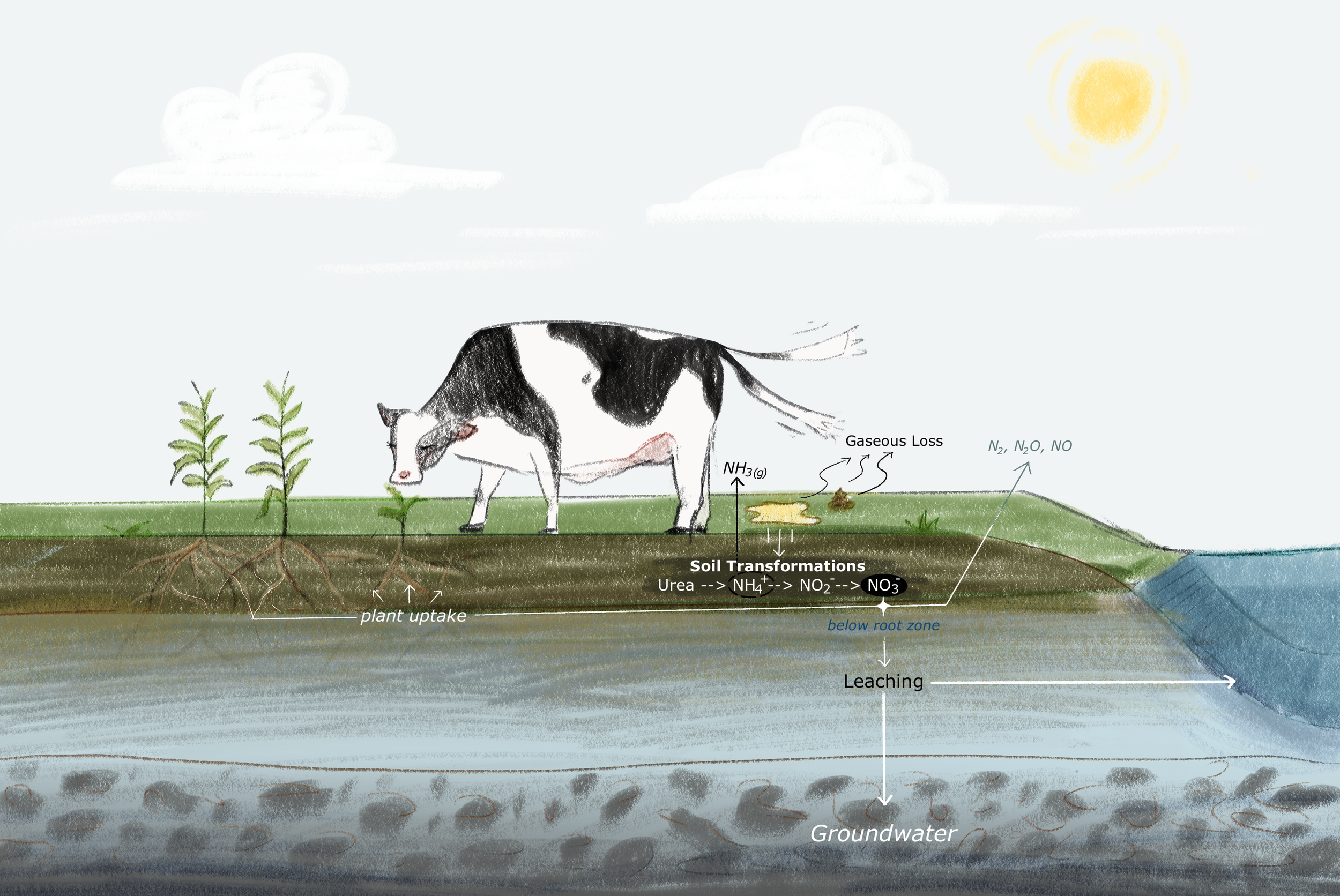
Figure 1: The Nitrogen Cycle in Dairy Farming
The Chemistry of Nutrient Pollution
Firstly, when the organic compound urea reacts with water or moisture, it undergoes hydrolysis catalysed by the enzyme urease. This enzyme is what breaks down urea into ammonia and carbon dioxide. Through this process, some of the nitrogen is lost as ammonia gas through volatilisation.
CO(NH2)2 + H2O 2NH3 + CO2
Following that is a two-step process called nitrification, in which ammonium, produced by the dissolution of ammonia in water, is oxidised into nitrite by soil bacteria Nitrosomonas, and then into nitrates by Nitrobacter [10].
2NH4+ + 3O2 2NO2- + 2H2O + 4H+
2NO2- + O2 2NO3-
Plants can now easily absorb this active form, which fuels growth. However, if there is excess nitrate, it will remain in the soil and leach to groundwater during heavy rainfall or over-irrigation, as it does not bind to soil particles and readily dissociates in aqueous environments under oxygen-free conditions. This is where the problem gets bigger, because groundwater is a common source of drinking water in New Zealand.
Phosphorus, on the other hand, is present as inorganic phosphate ions and binds strongly to soil particles, making it harder to wash out naturally, as illustrated in Figure 2.

Figure 2: Sequential process of how phosphorus (phosphates) bind to soil minerals [11].
Therefore, it enters the water when soil is washed and becomes sediment, triggering eutrophication: enrichment of nutrients in bodies of water, leading to an increase in primary productivity, such as an overgrowth of algae [12]. This will degrade water quality over time and eventually lead to dramatic drops in oxygen levels at night, once it dies and decomposes, making aquatic life unable to breathe and therefore causing a loss of biodiversity. Not only that, but excessive phosphorus can also promote the growth of toxic algae that produce cyanotoxins, which are harmful when ingested by both animals and humans [12]. Moreover, phosphates will continue to impact the ecosystem in the long term, even with reduced fertiliser usage, due to their persistence in water. Nitrogen can persist for long periods in groundwater before eventually travelling long distances and entering streams or rivers, as nitrates do not bind to soil particles because of their negative charge. In contrast, phosphate persists in water by attaching to sediment and slowly dissolving back into the water over time, driven by environmental factors such as soil erosion or surface runoff.
Thus, questions such as “Why not use greener fertilisers instead to mitigate this problem?” naturally arise. While there are many emerging greener alternatives, several factors inevitably influence the decision to adopt them: economic costs, farming culture, profit, and many more. Greener fertilisers, such as seaweed-based fertilisers, release nutrients much more slowly, resulting in lower yields. But it is also important to note that nitrate leaching is caused by animal urine rather than the nitrate itself. Therefore, if fertilisers are applied within the maximum limit of 190 kg N/ha, nitrogen leaching can be reduced. And fret not! Recent findings have shown that there has been a shift towards more sustainable nutrient management in New Zealand. Theané de Klerk [13] found that national fertiliser use is closely aligned with the amount required to maintain soil fertility, with the dairy sector applying slightly more phosphorus fertiliser than the sheep and beef sector, which generally applies less than required. By committing to these changes, agricultural productivity can be maintained while environmental impacts are reduced gradually.
This is especially important in Māori perspectives, where everything is fundamentally interconnected. We need to understand the impact of our interactions with nature to foster an ecocentric relationship with water, viewing it not merely as a tangible resource to be exploited. Rather, it is part of us, and we need to prioritise and conserve it. Additionally, the components of nutrients should not be perceived negatively as contaminants, as the driving force behind these problems is primarily our own actions. Therefore, acknowledging our values and attitudes towards water will help us identify ways we can support water rather than take it for granted. Only by doing so will we advance towards a more sustainable future. After all, change is hard.
Conclusion
Fertilisers are essential for supporting food production, especially in the dairy sector. However, excessive application of fertilisers has negatively impacted the environment. Considering the chemical properties of nutrients, this leads to water pollution and degradation, potentially contaminating our drinking water and further contributing to water scarcity. This is a complex problem that incorporates our necessities for life, requiring a balance between the need to produce food and our responsibility to protect water and our environment. This dilemma requires us to deeply reflect on our water consumption behaviours and food waste. With the help of science, a desire and willingness to change can help realise sustainable farming practices.
[1] B. H. Baker, C. A. Aldridge, and A. Omer, “Water: Availability and use,” Mississippi State University Extension. vol. 2016, pp. 3011, Nov, 2016. [Online]. Available: https://www.researchgate.net/publication/324226678_Water_Availability_and_use
[2] N. A. Cameron and R. A. M. Peer, “Quantifying water use in New Zealand’s dairy food system: A baseline for future sustainability,” Agricultural Systems, vol. 225, pp. 104272, Feb, 2025, doi: https://doi.org/10.1016/j.agsy.2025.104272.
[3] Ministry for Primary Industries, “Water Availability and Security in Aotearoa New Zealand: Supporting the sustainability, productivity, and resilience of the food and fibre sector,” Aug. 2021. Available: https://www.mpi.govt.nz/dmsdocument/47770-Water-Availability-and-Security-in-Aotearoa-New-Zealand. [Accessed: May 26, 2026]
[4] K. Sanderson, “Freshwater in New Zealand (2) - New Zealand in a world of water | BERL,” Berl.co.nz, 2019. [Online]. Available: https://berl.co.nz/our-mahi/freshwater-new-zealand-2-new-zealand-world-water
[5] DCANZ, “NZ Dairy Industry | Dairy Farming in New Zealand | DCANZ,” dcanz.com, 2025. Available: https://dcanz.com/the-new-zealand-dairy-industry/
[6] Fertiliser Association of New Zealand, “Fertiliser use in New Zealand | Fertiliser Association of New Zealand Inc,” Fertiliser.org.nz, 2020. Available: https://www.fertiliser.org.nz/about-fertiliser/fertiliser-use-in-nz
[7] C. Rose, “Greenpeace Aotearoa,” Greenpeace Aotearoa, Jun. 09, 2022. Available: https://www.greenpeace.org/aotearoa/publication/nes-briefing-to-ministers/
[8] Stats NZ, “Nitrate leaching from livestock | Stats NZ,” www.stats.govt.nz, Apr. 18, 2019. Available: https://www.stats.govt.nz/indicators/nitrate-leaching-from-livestock/
[9] Waikato Regional Council, “Waikato Regional Council Nitrogen leaching.” Available: https://www.waikatoregion.govt.nz/assets/WRC/CNM-factsheet-nitrogen-leaching_4-v2.pdf
[10] S. Nadarajan and S. Sukumaran, “Chemistry and toxicology behind chemical fertilizers,” Controlled Release Fertilizers for Sustainable Agriculture, pp. 195–229, 2021, doi: https://doi.org/10.1016/b978-0-12-819555-0.00012-1
[11] L. Espinoza, N. Slaton, and M. Daniels, “Agriculture and Natural Resources The Nitrogen and Phosphorous Cycle in Soils The Nitrogen Cycle.” Available: https://www.uaex.uada.edu/publications/pdf/FSA-2148.pdf
[12] Environmental Southland, “Phosphorus,” Environmental Southland. [Online]. Available: https://www.es.govt.nz/environment/water/catchment-science/whats-in-our-waterways/phosphorus
[13] Massey University, “Research finds New Zealand farmers largely getting phosphorus fertiliser balance right,” Massey.ac.nz, 2026. Available: https://www.massey.ac.nz/about/news/research-finds-new-zealand-farmers-largely-getting-phosphorus-fertiliser-balance-right/

Latisha is an Indonesian student entering her second year of undergraduate study, with an interest in the chemistry behind everything, trying to understand how and why things are the way they are. She loves anything creative: drawing, photography, cooking, baking, editing, designing, and journaling.