
Plastic Bottles, Microplastics, and Sustainability: The Hidden Cost of Convenience
Sustainability, Neuroscience | Sisi Zhang
Glossary:
Blood–brain barrier (BBB)
A highly selective protective membrane that separates the bloodstream from the brain, preventing most harmful substances from entering the central nervous system.
Circular economy
An economic system that aims to minimise waste by reusing, repairing, recycling, and extending the lifecycle of materials.
Circulatory system
The system that transports blood, nutrients, oxygen, hormones, and waste products throughout the body. It includes the heart, blood vessels, and blood.
Gastrointestinal system
The organ system responsible for digestion and nutrient absorption. It includes the mouth, oesophagus, stomach, intestines, and associated organs. It processes food and removes waste from the body.
Intestinal lining
The inner layer of the intestine is made of epithelial cells. It is responsible for absorbing nutrients from digested food into the body and acting as a barrier against harmful substances and pathogens.
Lung epithelium
The thin layer of cells that lines the airways and alveoli (air sacs) in the lungs. It helps with gas exchange (oxygen and carbon dioxide) and acts as a protective barrier against inhaled particles and pathogens.
Microplastics
Plastic particles smaller than 5 millimetres, formed from the breakdown of larger plastic items or manufactured at microscopic size.
Nanoplastics
Extremely small plastic particles typically less than 1 micrometre in size, capable of crossing biological barriers more easily than larger particles.
Neuroinflammation
Neuroinflammation is a dynamic process that plays essential roles in brain development, maintenance, and response to injury.
Neuronal toxicity
Damage to nerve cells that can affect communication between neurons and brain function.
Oxidative stress
A biological condition caused by an imbalance between reactive oxygen species and the body’s ability to detoxify them, potentially damaging cells and tissues.
Respiratory system
The system responsible for breathing and gas exchange. It includes the nasal passages, trachea, lungs, and alveoli, and supplies oxygen to the body while removing carbon dioxide.
Fun facts
A plastic bottle can take up to 100–1,000 years to fully break down, meaning every bottle ever made still exists in some form today [5]
Humans may unknowingly consume microplastics every week through food and water—some estimates suggest this could be equivalent to a credit card’s worth of plastic per week (by mass) [18]
Plastic waste concern
Have you ever stopped to think about how many plastic items you use in a single day? From water bottles to food containers, plastic has become so embedded in modern life that it often goes unnoticed. Estimates published in Science suggest that the United Kingdom produces around 215 grams of plastic waste per person per day—equivalent to roughly 22 plastic bottles or 39 plastic shopping bags based on weight [1]. While in New Zealand (NZ), the average plastic waste generated per day is 159 grams which might seem less in comparison but within a year’s span, 1.76 billion pieces of plastic container waste would be generated by NZ households [2]. This scale of consumption highlights a deeper sustainability issue as most plastics are designed for single use and are discarded within minutes afterwards. Although some people adhere to the sustainability principles of “refuse, reduce, or reuse” [3], only a small fraction (28%) of plastic waste is effectively recovered, with large amounts persisting in landfills or leaking into natural environments [2]. This gap between perception and reality has been described as “plastic blindness,” where people underestimate how much plastic they use and misunderstand what happens to it after disposal [4].
The impacts of plastic waste
As we all know, plastic waste has widespread environmental and ecological consequences, often persisting for centuries and contributing to pollution, climate change, and biodiversity loss. Plastic waste is highly durable and slow to degrade, which may take 100 to 1,000 years to break down depending on conditions such as temperature, pH and ultraviolet (UV) radiation [5], [6]. Once plastic enters the environment, it does not simply disappear. Instead, it is exposed to sunlight, mechanical forces, and weathering processes that gradually break larger plastic items into smaller fragments. Over time, these fragments become microplastics and nanoplastics which can persist in soil, water systems, and the atmosphere [7]. Because of their small size and durability, microplastics are now considered a widespread and persistent form of environmental pollution, and human exposure has become difficult to avoid [8]. These particles can enter the body through several pathways, including drinking water, food products, and even inhaled air [8]. Studies have found microplastics in bottled water, seafood, and household dust, indicating that exposure is no longer limited to specific environments but is instead part of everyday life [9] .
The hidden cost of plastic use: Damaged brains
Plastic water bottles and containers are convenient to use, yet many people do not realise that the long-term accumulation of plastic waste may also affect human health. Recent studies provide increasing quantitative evidence of human exposure to microplastics [10]. Research has estimated that individuals may ingest approximately 39,000–52,000 microplastic particles per year through food and drink, with an additional 120,000 particles annually when inhalation is included [10]. Individuals who consume only bottled water may ingest an additional approximately 90,000 microplastic particles per year, compared to approximately 4,000 particles from tap water sources [10]. Recent studies have detected microplastic particles in human blood, lungs, and even the brain, suggesting that these materials are capable of circulating throughout the body rather than remaining confined to one area [11]. These findings highlight the widespread nature of microplastic exposure in everyday life and suggest that ingestion is strongly influenced by lifestyle and consumption choices.
But how exactly does plastic enter the human body and specifically, the brain? Figure 1 illustrates the potential pathway of microplastics from environmental pollution to the human brain [8]. First, plastic waste such as water bottles and bags undergo environmental degradation, breaking down into microscopic particles known as microplastics.These are widely dispersed through the air, soil, and water systems. These particles can then enter the human body through ingestion of contaminated food and water or inhalation of airborne particles [8].
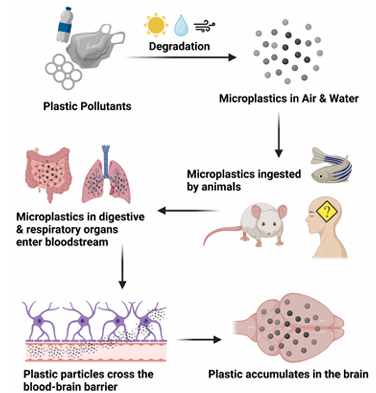
Figure 1: How microplastics enter the brain [8].
Once inside the body, microplastics may deposit themselves in the gastrointestinal and respiratory systems, where the smallest particles (particularly in the micro- and nano-size range) can cross biological barriers such as the intestinal lining or lung epithelium and enter the bloodstream [8]. From the circulatory system, these particles may be transported throughout the body and distributed to different organs [8]. Although the blood–brain barrier is a highly selective biological interface that normally prevents most foreign substances from entering the brain, emerging evidence suggests that extremely small particles may be able to pass through this barrier via mechanisms such as translocation or barrier disruption [12]. Once across the blood-brain barrier, these particles may accumulate in brain tissue, as shown in Figure 2, which represents a visualisation of suspected microplastic particles detected in human brain tissue [13]. These particles were identified using analytical imaging techniques reported in recent studies, providing visual evidence of microplastic presence within biological brain samples [13].

Figure 2: Visualization of suspected plastic particles detected in brain tissue [13].
Overall effects of microplastics on brain
Recent research suggests that microplastics may have several potential effects on brain health, although the evidence in humans is still developing [7], [14]. Once these particles reach neural tissue, they may trigger neuroinflammatory responses, where immune activity in the brain becomes elevated and may contribute to cellular stress or damage [7]. In addition, microplastics have been associated with oxidative stress, which occurs when the production of reactive oxygen species exceeds the body’s ability to neutralise them, potentially leading to damage in neurons and surrounding brain structures [7]. Experimental studies also indicate possible neuronal toxicity caused by microplastics, including interference with synaptic communication and normal nerve cell function [7], [14]. These mechanisms are particularly concerning because neuroinflammation, oxidative stress, and neuronal toxicity are already known to be involved in the progression of neurodegenerative diseases such as Alzheimer’s disease and Parkinson’s disease [7], [14].
Although it is important to note that most current evidence is derived from experimental models and the long-term neurological impact of microplastic exposure in humans remains uncertain, the increasing environmental accumulation of plastic waste raises potential concerns for overall human health and well-being. Continued research is therefore needed to better understand the extent of microplastic exposure, its biological effects, and its possible implications for neurological and systemic health [3]. While definitive conclusions cannot yet be drawn, the routine and often unconscious use of plastic products for convenience may carry hidden costs, not only in terms of environmental degradation but also potential risks to human health. This highlights the importance of increasing awareness and adopting more sustainable consumption practices to reduce reliance on single-use plastics.
Sustainable View: Actions for Students and Universities
The environmental and potential health impacts of the plastic products we use daily should be a significant concern, and this article highlights the importance of adopting a sustainability-focused approach in both perception and practice.
At the student level, meaningful change can be achieved through consistent adoption of low-waste behaviours, including reducing reliance on single-use plastics, choosing reusable alternatives, and actively participating in campus recycling and waste separation systems. In addition, involvement in sustainability clubs, volunteer programmes, and environmental campaigns can increase awareness and promote behavioural change within the wider student community. Studies show that active engagement and sustainability-focused education can significantly improve environmental awareness and encourage long-term behavioural change among students [15].
Universities play a central role in advancing sustainability due to their position as both knowledge producers and influential institutions. One key action is the implementation of circular economy principles within campus operations [16]. This includes reducing single-use plastics in cafeterias, events, and administrative activities, and replacing them with reusable alternatives. Research highlights that universities worldwide are already adopting circular strategies such as reuse systems, improved recycling infrastructure, and stakeholder engagement programmes to reduce plastic waste generation [16]. In addition, universities can integrate sustainability into procurement policies by prioritising suppliers that minimise plastic packaging and adopt environmentally responsible practices.
Beyond operational changes, universities also contribute through education and research. Integrating sustainability education across disciplines helps embed environmental awareness more broadly, while research into alternative materials, microplastic pollution, and waste management technologies contributes to long-term solutions. Furthermore, educational initiatives and awareness campaigns play an important role in addressing plastic pollution at all levels of society [17].
Overall, achieving sustainability in relation to plastic waste requires coordinated action at multiple levels. While universities provide the structural and educational framework, students play a crucial role in driving behavioural change. Together, these efforts support a transition toward a more sustainable and circular approach to plastic use, reducing environmental impact and contributing to long-term ecological and societal well-being. From a broader perspective, this transition is supported by circular economy principles that aim to minimise waste generation and keep materials in use for as long as possible.
[1] L. Smith, “How much plastic does one person use in a day?,” Natural ER, Jul. 23, 2019. [Online]. Available: https://naturaler.co.uk/how-much-plastic-a-day/ [Accessed: May 11, 2026]
[2] M. Ellison, “Kiwis' Efforts: Recycling Plastic Statistics Unveiled,” ShunPoly, Mar. 23, 2025. [Online]. Available: https://shunpoly.com/article/how-much-plastic-is-recycled-in-new-zealand [Accessed: May 11, 2026]
[3] B. Ikiz, “Plastics in the brain: What science is revealing,” Psychology Today, Oct. 15, 2025. [Online]. Available: https://www.psychologytoday.com/us/blog/connecting-neurons/202510/plastics-in-the-brain-what-science-is-revealing[Accessed: May 11, 2026]
[4] F. Macdonald, “Huge amounts of plastic waste goes unnoticed – here’s what to do about it,” The Conversation, Nov. 8, 2025. [Online]. Available: https://theconversation.com/huge-amounts-of-plastic-waste-goes-unnoticed-heres-what-to-do-about-it-268702 [Accessed: May 11, 2026]
[5] U.S. Environmental Protection Agency, “Impacts of Plastic Pollution,” EPA, May 14, 2026. [Online]. Available: https://www.epa.gov/plastics/impacts-plastic-pollution. [Accessed: May 18, 2026].
[6] Z. Lin et al., "Current progress on plastic/microplastic degradation: Fact influences and mechanism," <u>Environmental Pollution</u>, vol. 304, p. 119159, 2022. [Online]. Available:https://www.sciencedirect.com/science/article/pii/S0269749122003736 [Accessed: Jun 18, 2026]
[7] S. Fang, Z. Yin, L. Li, Q. Cai, P. Zheng, and L. Chen, “Overall effects of microplastics on brain,” Frontiers in Toxicology, 2025. [Online]. Available: https://pmc.ncbi.nlm.nih.gov/articles/PMC12675269/
[8] B. Andrassy, “Your brain on plastics,” Kenyon College Neuroscience Repository, 2009. [Online]. Available: https://digital.kenyon.edu/cgi/viewcontent.cgi?article=1110&context=skneuro
[9] M. Yousefi, Y. Mazaheri, M. Soltani, A. Rezagholizade-shirvan, P. Sadighara, E. Askari, A. Salehi, M. Alikord, and S. Shokri, “Microplastics as emerging contaminants in the food chain: Assessing exposure and threats to consumers,” Food Bioscience, vol. 74, p. 108035, Dec. 2025. [Online]. Available: https://www.sciencedirect.com/science/article/pii/S2212429225022126
[10] K. D. Cox, G. A. Covernton, H. L. Davies, J. F. Dower, F. Juanes, and S. E. Dudas, “Human Consumption of Microplastics,” Environmental Science & Technology, vol. 53, no. 12, pp. 7068–7074, 2019. https://doi.org/10.1021/acs.est.9b01517
[11] H. Kadry, B. Noorani, and L. Cucullo, “A blood–brain barrier overview on structure, function, impairment, and biomarkers of integrity,” Fluids and Barriers of the CNS, vol. 17, no. 1, 2020. [Online]. Available: https://pmc.ncbi.nlm.nih.gov/articles/PMC7672931/
[12] Y. Li, L. Chen, N. Zhou, Y. Chen, Z. Ling, and P. Xiang, “Microplastics in the human body: A comprehensive review of exposure, distribution, migration mechanisms, and toxicity,” Science of The Total Environment, vol. 946, p. 174215, Oct. 2024. [Online]. Available: https://www.sciencedirect.com/science/article/pii/S0048969724043638
[13] A. J. Nihart et al., “Bioaccumulation of microplastics in decedent human brains,” Nature Medicine, vol. 31, pp. 1114–1119, 2025. https://doi.org/10.1038/s41591-024-03453-1
[14] D. M. Teleanu et al., “An overview of oxidative stress, neuroinflammation, and neurodegenerative diseases,” International Journal of Molecular Sciences, vol. 23, no. 11, p. 5938, 2022, doi: https://doi.org/10.3390/ijms23115938
[15] S.-K. Yeung, W.-M. W. So, N.-Y. I. Cheng, T.-Y. Cheung, and C.-F. Chow, “Comparing pedagogies for plastic waste management at university level,” International Journal of Sustainability in Higher Education, vol. 18, no. 7, pp. 1039–1059, Nov. 2017, doi: https://doi.org/10.1108/IJSHE-04-2016-0073
[16] R. Giurea et al., “Fostering sustainability: integrating circular economy practices to manage plastic waste in universities,” Journal of Physics: Conference Series, vol. 3028, p. 012018, 2025, doi: https://iopscience.iop.org/article/10.1088/1742-6596/3028/1/012018
[17] J. Liu et al., “Environment education: A first step in solving plastic pollution,” Frontiers in Environmental Science, vol. 11, p. 1130463, Mar. 2023, doi: https://doi.org/10.3389/fenvs.2023.1130463
[18] M. Pletz, “Ingested microplastics: Do humans eat one credit card per week?,” Journal of Hazardous Materials Letters, vol. 3, p. 100071, Nov. 2022. [Online]. Available: https://www.sciencedirect.com/science/article/pii/S2666911022000247

Sisi Zhang is currently pursuing a Bachelor of Science in psychology. With a strong interest in the intersection of human health, behaviour, and environmental sustainability, Sisi is passionate about exploring how everyday choices—such as plastic consumption—can have far-reaching effects on both individual wellbeing and the wider ecosystem.