
A Fear of Jaws: What Does Our Relationship with Sharks Tell Us About Our View of Complex Systems?
Marine Conservation and Sharks | Cara-Sophia Andres
If sharks vanished tomorrow, you probably wouldn’t notice. The ocean would still look blue. But if you looked beneath the surface, you would see balance unravelling, first slowly, almost unnoticeably, until all of a sudden entire ecosystems collapse. Often viewed as not much more than ‘man-eating’ machines, sharks largely remain invisible or vilified in public conversations about conservation. Yet, they have a pivotal role to play not just in marine ecosystems but in our understanding of and approach to complex systems as a whole.
Our misunderstanding of sharks mirrors our misunderstanding of the oceans, and even how entire systems and societies collapse when complexity is ignored. What would happen if we learned to see sharks - and complexity itself - differently?
Framing Complexity
Complex systems are found everywhere across nature, technology and society - from the folding of a single protein molecule to organisms, ecosystems, economies, cultures, and even the structure of galaxies across the universe [1]. They are networks of many interacting parts whose collective patterns and behaviours cannot be explained by studying their individual parts alone [2]. Distinct from complicated systems - like a car engine, which can be taken apart and put back together - complex systems self-organise into living, dynamic wholes greater than the sum of their parts [3].
Like fish following basic cues to form a highly coordinated school or cells communicating to assemble a functional organism, simple interactions emerge into far greater and unpredictable outcomes [4]. Because these patterns don’t follow straightforward cause-and-effect, attempts to explain or manage them with linear thinking often leave us blind to the real drivers of change.
Marine ecosystems are among the most complex systems on the planet [5]. Interconnected across a vast global ocean, they span scales from microscopic plankton to currents that regulate global climate, and are closely interlinked with human systems like fisheries and trade [6]. To date, we have only explored approximately 5% of what lies beneath the surface of our oceans [7]. Taking this into account, the immense variety of their interconnected parts and emerging behaviours becomes increasingly difficult to comprehend.
Within this complex system, sharks play a regulating role. Both as products of complexity and key agents in maintaining it, they are vital to the ocean’s health and the systems that ultimately depend on it. However, our perception of them often obscures this truth.
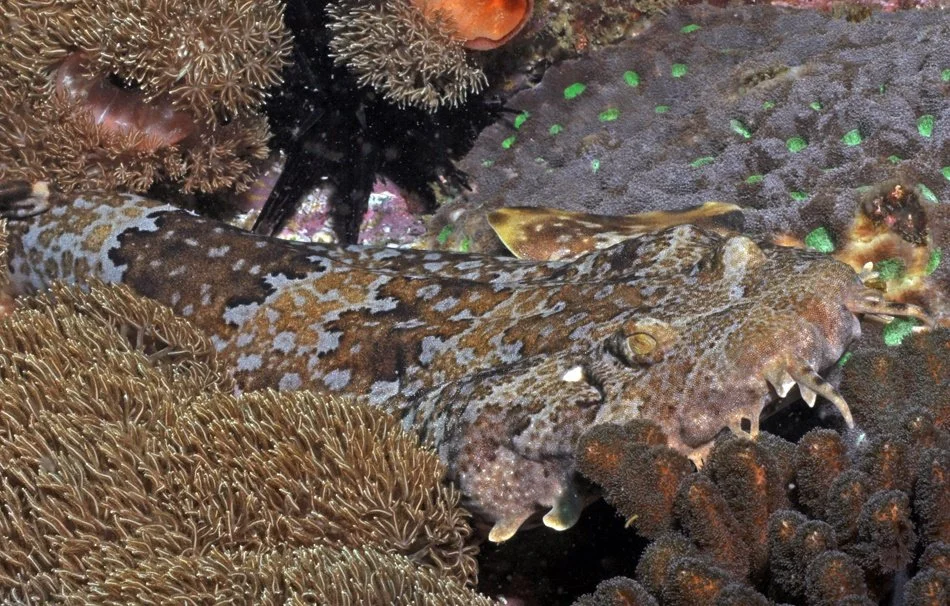
Figure 2: Where’s Wobby? Masters in the art of ambushing, wobbegongs blend perfectly into their environment. [17]
Sharks: Perception Versus Reality
A certain level of fear towards sharks can be traced back to well before the invention of the camera, but when Steven Spielberg capitalised on this narrative in the 1975 film Jaws, he set a whole new wave of terror ripping across the globe. Released at a time when relatively little was known about sharks, they were commonly believed to be mindless, predatory animals. As a result of the film this perception turned into widespread panic, with people avoiding shallow beaches and even swimming pools [9]. The book’s author, Peter Benchley, later spent his life trying to correct the myth that he had helped to create [10].
Just like marine ecosystems, our social systems are complex - subject to unpredictable interactions and emergent behaviours. One person’s view of sharks may seem isolated, but as this view spreads throughout the media and interacts with others, it can emerge into systemic impacts: widespread fear, skewed policy attention, targeted culling, and sustained underfunding [11].
Fifty years later, the Jaws narrative still dominates public discourse, shaping the systems responsible for conserving sharks and, by extension, the complex systems that depend on them [12]. When most people think of sharks, they tend to picture the fin of a great white piercing the surface as it charges after a helpless human in relentless pursuit. In reality sharks aren’t mindless monsters but highly diverse and misunderstood keystone species vital to ocean health [11]. Our collective imagination has reduced an extraordinary diversity of forms and functions to a single false stereotype, compounding into blind spots that obscure the real threats to ocean health [9].
Sharks have been around for over 400 million years [13]. To put this into perspective, they existed well before the first trees evolved, the first land vertebrates crawled ashore, and Saturn got its rings. If the history of complex life on our planet was a 24-hour clock, humans arrived less than 2 seconds to midnight, while sharks have been up and at ‘em since 5am. Part of the class Chondrichthyes, which also includes rays and chimaeras, sharks are found in all oceans from the tropics to the poles to the deep seas, and even in estuaries and some freshwater ecosystems [14]. With almost 600 extant species described to date and more discovered every year, they range from the 16cm dwarf lanternshark to the 18m long whale shark. These animals are so perfectly adapted to their distinct environments, many lineages appear to have changed little in millions of years. Colloquially often described as ‘living fossils’, they carry the blueprint for resilience [15].
Sharks are cartilaginous fishes. Instead of bone, their skeletons are made out of flexible cartilage, making them lighter, more buoyant and remarkably agile in the water. Their vision, smell, and hearing are well-developed and specialised to their distinct environments - along with their electroreception which allows them to detect even weak electrical signals from muscle contractions through murky water or sand [13]. Like other fish and some amphibians, sharks also possess a kind of sixth sense called the lateral line. These fluid-filled canals running along each side of their body are lined with hair-like receptors that pick up pressure changes and vibrations, letting them sense the faintest movements both near and distant [16].
While all sharks share these super-senses, they are far from uniform. Highly diverse, they are grouped into 8 main orders based on their morphology, genetics and other anatomical traits. These range from the flattened angelsharks (Squatiniformes) that lie camouflaged on the seafloor, to the land-walking epaulette sharks (Orectolobiformes), to glow-in-thedark lanternsharks (Squaliformes), to the torpedo-shaped shortfin mako (Lamniformes), the fastest shark in the world [16]. Their colours are equally diverse, spanning muted greys and browns to yellows and even bubblegum pink. Some sharks migrate thousands of kilometres across oceans, while others spend their entire lives within the boundaries of a single reef or estuary [14].
Ecologically, sharks occupy multiple roles. Some are apex predators, regulating prey numbers at the top of food webs and keeping populations strong and healthy. Others are mesopredators, keeping smaller fishes and invertebrates in check, thereby regulating the environments those animals feed on. Still others are filter feeders, like whale sharks and basking sharks, and cycle nutrients through plankton-rich waters, or scavengers that clean up carrion and waste. Across each of these niches, sharks regulate the flow of energy and matter in the ocean, both locally and across the vast distances some species migrate [14].
Remove sharks, and the consequences cascade far beyond a single species. Changes at the top of a food web ripple down through its lower levels, altering species interactions and destabilising entire ecosystems - called a trophic cascade [13]. For example, with their predators removed, the populations of mid-level species like rays and smaller sharks often increase unchecked. In return, they can decimate shellfish beds or deplete herbivores critical for keeping habitats such as coral reefs, kelp forests, or seagrass beds healthy.
In this way, sharks act as the tipping-point agents in the complex systems of the ocean. Their presence supports resilience and gives us insights into the importance of understanding the complex system they help regulate. And since the ocean itself is a linchpin in the Earth’s climate and life-support systems, the stakes of losing sharks extend far beyond them [14]. So why don’t we act?
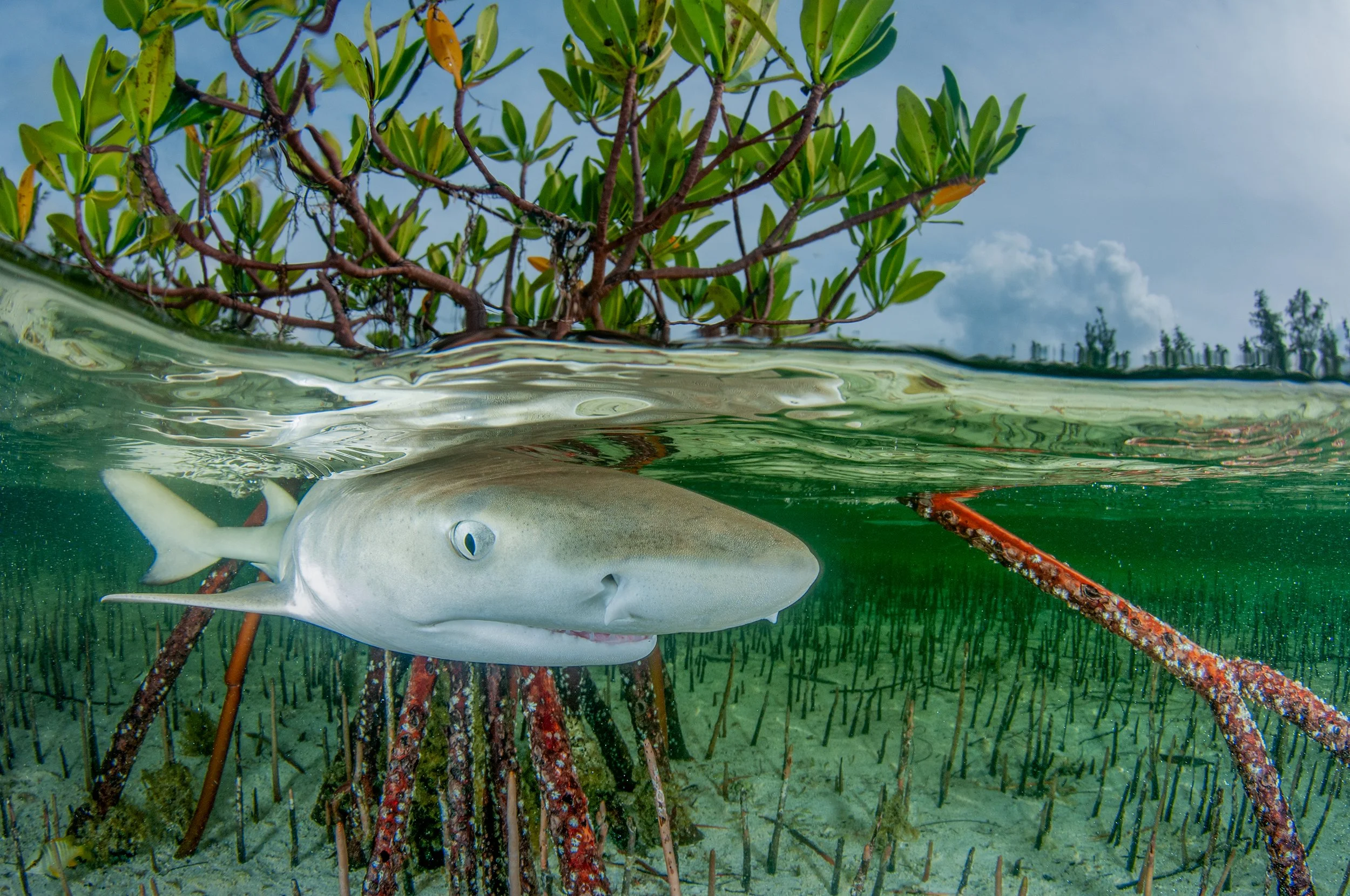
Figure 1: A lemon shark pup hiding among the mangroves in the Bahamas. Viviparous like mammals, shark pups must fend for themselves from the moment they are born. Nurseries such as mangroves provide a safe learning ground with plenty of food and protection. [8]
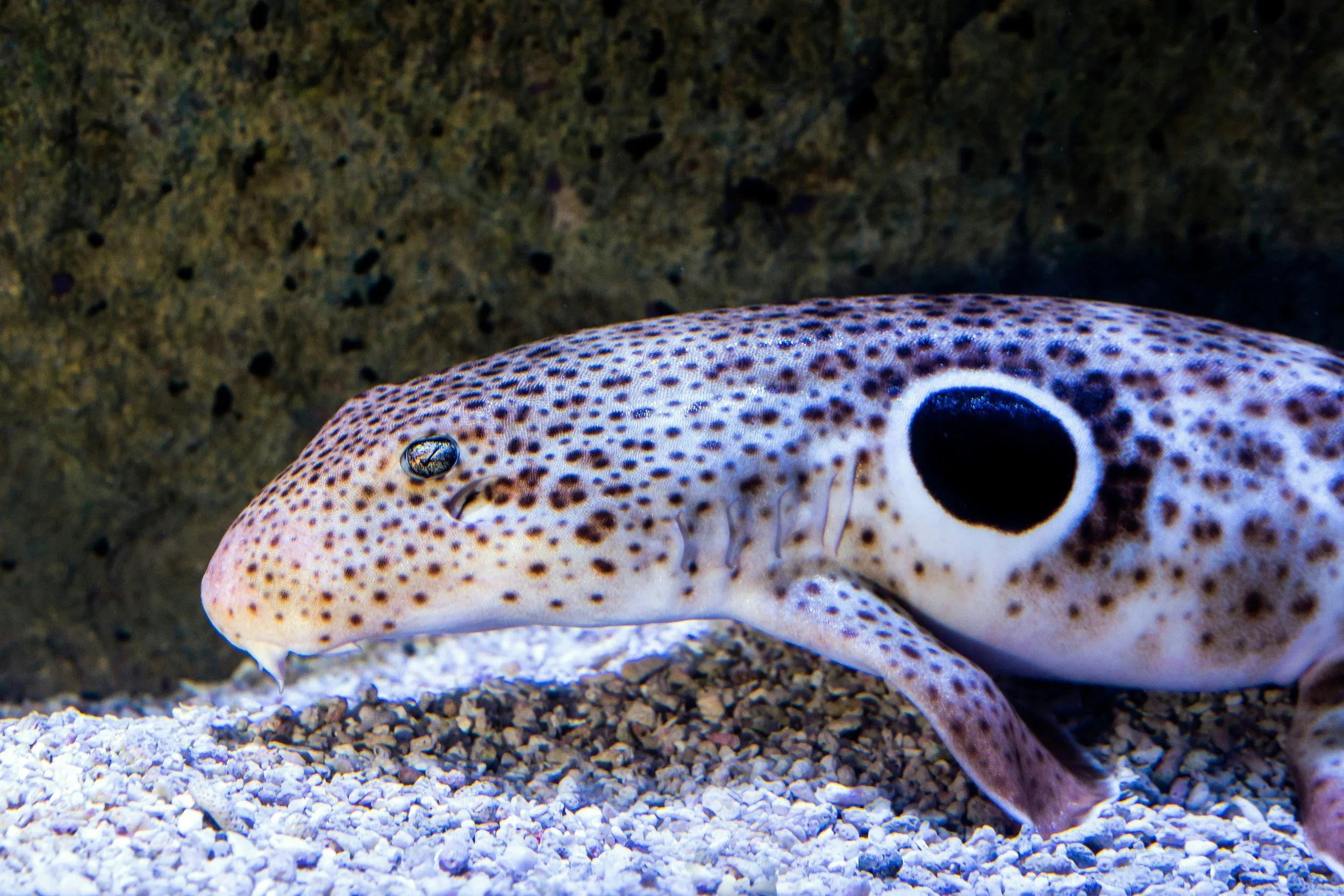
Figure 4: Few divers get to tick the elusive thresher shark off their bucket list. Its long tail makes it speedy in the water and is also a useful tool for hunting: herding, trapping, and then striking fish to stun them. [19].
The Cost of Invisibility
It’s difficult to care about something when you don’t even know it’s there: the invisibility of marine ecosystems is arguably marine conservation’s biggest challenge.
Our planet, ironically named Earth, is made of 71% ocean, yet a staggering 99% of people globally have never had the chance to explore beneath the surface, and less than 20% of the global population lives close enough to the coast to have regular access to marine environments [6], [21]. We live our lives on land, surrounded by trees, grass, birdsong - little bits of nature we consciously and subconsciously register as reminders of the ecosystems that we are a part of. But for the majority of people, the ocean is invisible. Existing only as a faraway blue surface, its systems easily slip out of sight and out of mind.
In Baba Dioum’s famous words: “In the end we will conserve only what we love; we will love only what we understand; and we will understand only what we are taught.” The invisibility of marine ecosystems makes each of these steps harder. Without experiences that shape understanding, the ocean remains abstract and is much easier to over-simplify. It’s easier to have a ‘fear of jaws’ than to comprehend and address the system in all its complexity [22]. This invisibility comes at a cost, skewing our attention toward what is easily seen, not necessarily what is important. When a forest burns or is cut down, the destruction is immediately visible and relatable. We can visualise what that land looks like as a result. Below the surface of our oceans, however, change often happens gradually and largely unseen. Coral reefs bleach one hot summer at a time. Seagrass beds slowly shrink under sediment or overgrazing. The collapse of shark populations destabilises food webs quietly. Bottom trawlers destroy seabeds one pass at a time and all the while, to us the water still looks blue. By the time the impacts surface, the damage is much harder to reverse [23].
We all know the environment is in crisis, and the oceans are no exception. Warming waters, dying reefs, collapsing fisheries, and plastic pollution are all symptoms of a system under immense strain. Sharks demonstrate what happens when complexity is ignored: we misdiagnose the problem, chase the wrong solutions, and leave the real ones unfunded. Globally, sharks have seen a 75% decline in just 50 years, with over a third of species now facing extinction [11]. In Aotearoa New Zealand’s Tīkapa Moana | Hauraki Gulf, that number is even higher, sitting at just below a 90% decline in shark numbers since the 1920’s [24]. When it comes to solutions, much of the public discourse around shark conservation still circles shark finning, an easy scapegoat based on emotional resonance instead of evidence. Meanwhile, the much larger threats of overfishing, the shark meat trade, and collapsing ecosystems remain unaddressed. [11]
This mismatch between what is visible (and simple) and what is vital (but complex) doesn’t just show up through media but also in money: The ocean generates trillions of dollars of value every year through fisheries, carbon storage, and coastal protection. Yet, we spend less than 1% of global funding to conserve it [25]. Fully protecting the entire global ocean has been estimated at an annual cost of approximately US$73 billion (~NZ$125 billion). By comparison, the USA spends US$1.8 trillion (~NZ$3.1 trillion) p.a. on its military alone (that’s a 2,366% difference) [26]. We could safeguard the complex systems that sustain life on Earth for a fraction of what one country spends on conflict - the absurdity of our current systems and priorities speaks for itself.
Rethinking Complexity Complexity becomes overwhelming when hidden or hard to grasp, and so we reach for simplified stories instead. Sharks serve as a reminder that when we ignore complexity and try to force linearity, we create blind spots that lead to systemic failure [28]. But complex systems don’t just pose a challenge, they are also the blueprint for resilience and a better path forward [2]. Marine ecosystems are some of the most resilient systems on Earth and a great example of adaptive self-organisation. Take away major pressures like overfishing and pollution, even temporarily, and degraded marine ecosystems often rebound much faster and with less ongoing human input than their land-based counterparts [29].
So perhaps sharks are more than just symbols of fear or even resilience. They remind us that complexity brings both challenges and opportunities, and that our future depends on learning to work with, rather than against it. What other complex systems might benefit from this shift in perspective? Education could nurture diverse, networked ways of learning, instead of centring around standardised testing. Health systems could shift from treating isolated symptoms to addressing the interconnected factors that shape wellbeing. Economies and politics could prioritise resilience and participation over chasing GDP and quick fixes. Embracing complexity could open space for adaptive solutions that last [30].
A first step to reframing how we think about the complexity of our world might be as simple as changing how we think about sharks. If we can stop seeing them as monsters and start seeing them as highly diverse, key regulators of balance across our oceans, we can learn to embrace the intricate, unpredictable, complex systems all around us. And if we can reframe sharks, what else can we reframe? And what does that say about us?
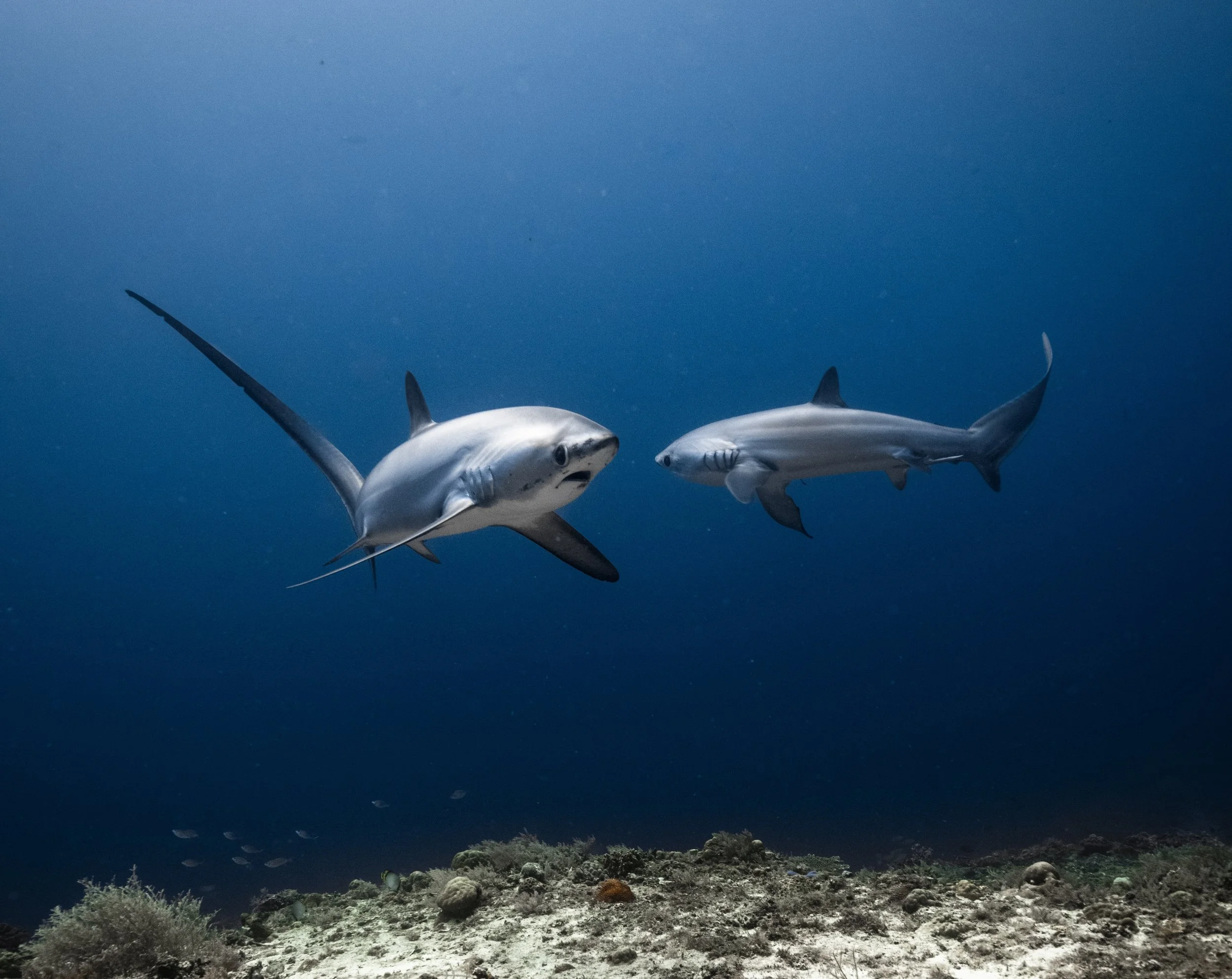
Figure 3: One small step for sharks, one giant leap for Elasmobranchii: an epaulette shark going for a wander on the seafloor. [18]
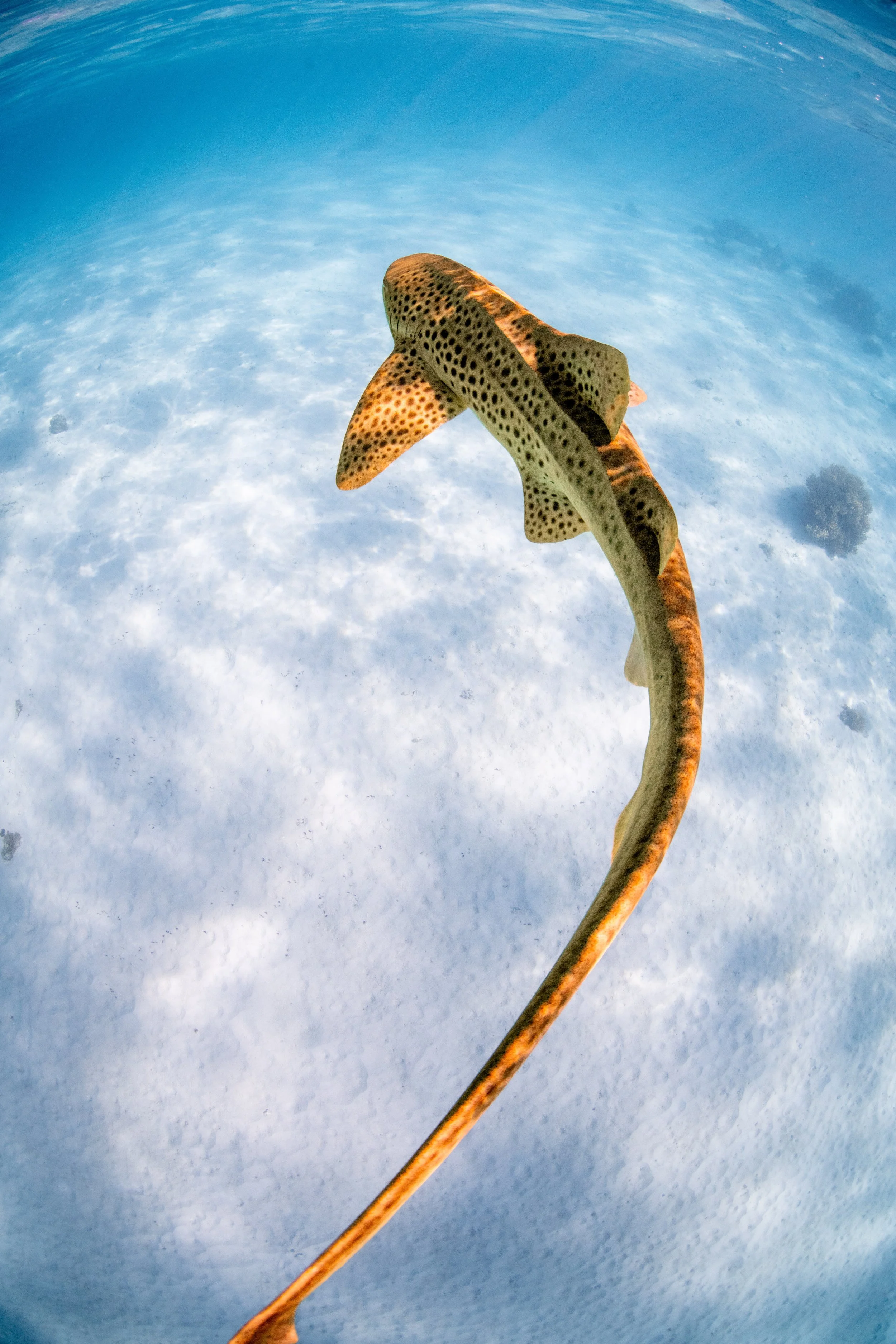
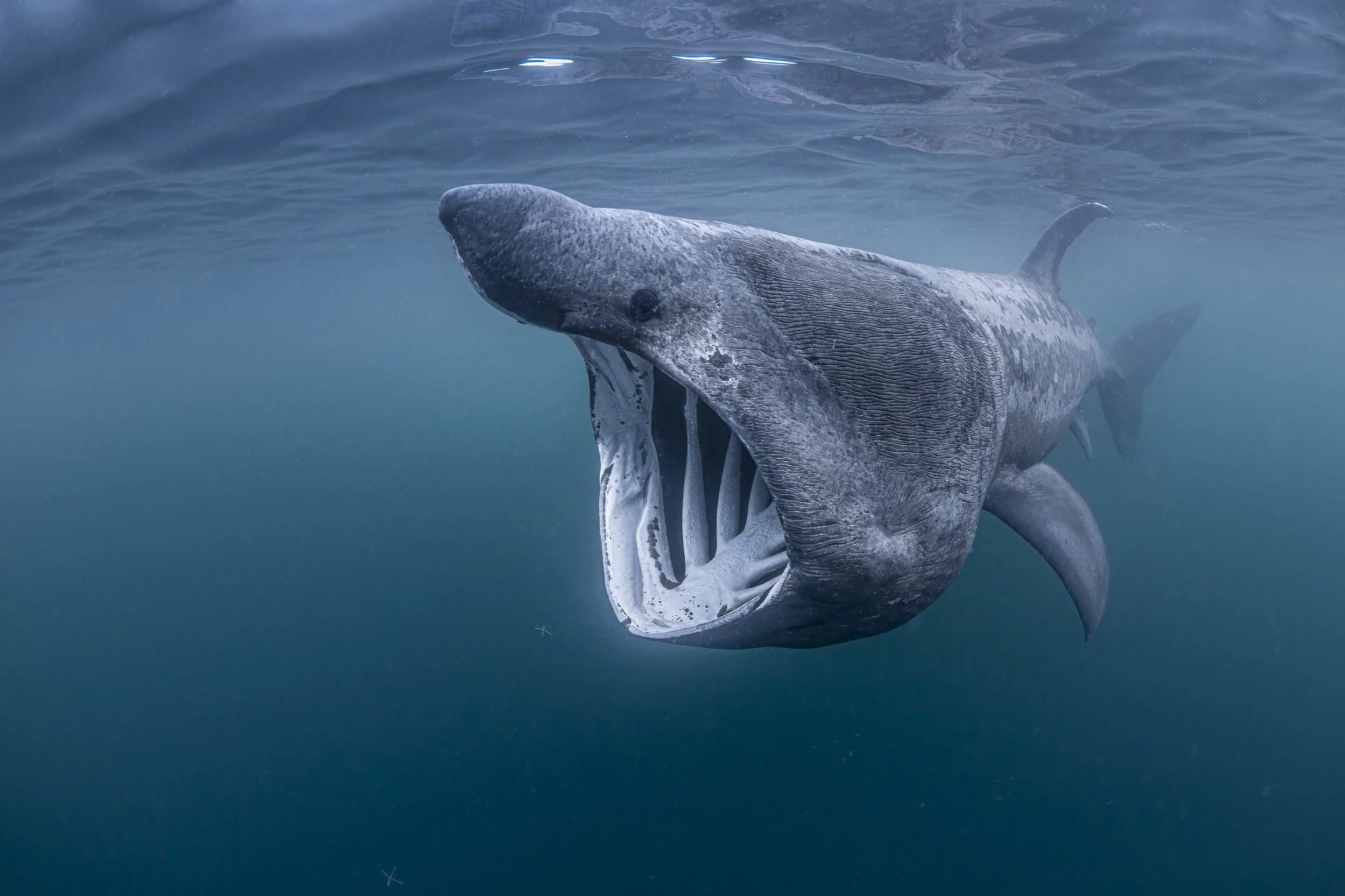
Figure 6: Few divers get to tick the elusive thresher shark off their bucket list. Its long tail makes it speedy in the water and is also a useful tool for hunting: herding, trapping, and then striking fish to stun them. [19].
Figure 5: Spots or stripes? An adult leopard shark (Stegostoma tigrinum) cruises along the Ningaloo Reef in Australia. Also known as zebra sharks, they have distinct zebra-like stripes as juveniles and only come into their leopard print when they reach adulthood. [20]
[1] M. S. Miguel, “Frontiers in Complex Systems,” vol. 1, 2023, doi: 10.3389/fcpxs.2022.1080801.
[2] A. Ma’ayan, “Complex systems biology,” Journal of the Royal Society Interface, vol. 14, 2017, doi: 10.1098/rsif.2017.0391.
[3] A. Matheson and M. Luczak-Roesch, “Complex is different from complicated, and why that matters.” Accessed: Aug. 18, 2025. [Online]. Available: https://www.tepunahamatatini.ac.nz/2024/06/05/ complex-is-different-from-complicated/.
[4] J. Tonkin and J. Talbot-Jones, “Emergence: How interactions create complexity from simplicity.” Accessed: Aug. 09, 2025. [Online]. Available: https://www.tepunahamatatini.ac.nz/2024/07/26/ emergence-how-interactions-create-complexity-from-simplicity/.
[5] M. Fogarty, R. Gamble, and C. T. Perretti, “Dynamic Complexity in Exploited Marine Ecosystems,” Frontiers in Ecology and Evolution, vol. 4, 2016, doi: 10.3389/fevo.2016.00068.
[6] S. Sunagawa et al., “Tara Oceans: towards global ocean ecosystems biology,” Nat Rev Microbiol, vol. 18, no. 8, pp. 428–445, Aug. 2020, doi: 10.1038/s41579-020-0364-5.
[7] S. Mohsan, Y. Li, M. Sadiq, J. Liang, and M. A. Khan, “Recent Advances, Future Trends, Applications and Challenges of Internet of Underwater Things (IoUT): A Comprehensive Review,” Journal of Marine Science and Engineering, 2023, doi: 10.3390/jmse11010124.
[8] A. Kainrath. A lemon shark in the mangroves in the Bahamas. Ocean Image Bank. [Photo]. Available: https://www.theoceanagency.org/ search-result?img=ZVKJ0hQAACIAKxZH.
[9] L. De Vos, “Fear and fascination: has Jaws shaped how we talk about sharks?,” Save Our Seas Foundation. Accessed: Aug. 27, 2025. [Online]. Available: https://saveourseas.com/fear-and-fascinationhas-jaws-shaped-how-we-talk-about-sharks/.
[10] D. McGuire, “How Jaws Influenced Shark Perception,” Shark Stewards. Accessed: Aug. 27, 2025. [Online]. Available: https:// sharkstewards.org/how-jaws-influenced-shark-perception/.
[11] D. S. Shiffman, “The Causes and Consequences of Public Misunderstanding of Shark Conservation,” Integr Comp Biol, vol. 64, no. 2, pp. 171–177, Aug. 2024, doi: 10.1093/icb/icae080.
[12] I. Cermak, “Jumping the Shark: White Shark Representations in Great White Serial Killer Lives—The Fear and the (Pseudo-) Science,” Journalism and Media, 2021, doi: 10.3390/journalmedia2040035.
[13] N. K. Dulvy et al., “Challenges and Priorities in Shark and Ray Conservation,” Current Biology, vol. 27, no. 11, pp. R565–R572, Jun. 2017, doi: 10.1016/j.cub.2017.04.038.
[14] S. Dedman et al., “Ecological roles and importance of sharks in the Anthropocene Ocean,” Science, vol. 385, no. 6708, p. adl2362, Aug. 2024, doi: 10.1126/science. adl2362.
[15] Y. Hara et al., “Shark genomes provide insights into elasmobranch evolution and the origin of vertebrates,” Nature Ecology & Evolution, vol. 2, pp. 1761–1771, 2018, doi: 10.1038/s41559-018-0673-5.
[16] Ocean Portal Team and D. Shiffman, “Sharks,” Smithsonian National Museum of Natural History. Accessed: Aug. 20, 2025. [Online]. Available: https://ocean. si.edu/ocean-life/sharks-rays/sharks.
[17] R. Stuart-Smith. Gulf wobbegong (Orectolobus halei) at the Solitary Islands, New South Wales. 2016. [Photo]. Available: https://commons.wikimedia.org/wiki/ File:Orectolobus_halei_solitary_islands. jpg.
[18] D. Clode. An Epaulette Shark crawls along at the Cairns Aquarium. 2021. [Photo]. Available: https://unsplash.com/photos/ white-and-black-fish-on-black-andbrown-surface-lYv5N7ZKXcM.
[19] D. Escayola. Thresher sharks over a coral reef, Malapascua, Philippines. Ocean Image Bank. [Photo]. Available: https:// www.theoceanagency.org/searchresult?img=aFPfKREAACkAe-A5.
[20] D. Escayola. Leopard Shark, Ningaloo, Australia. Ocean Image Bank. [Photo]. Available: https:// www.theoceanagency.org/searchresult?img=aFM6QxEAACkAeuiy.

Cara-Sophia is a research master’s student, workshop facilitator, and designer. Working at the intersection of design, marine science, policy, and community, she builds capacity for better conservation solutions. She is passionate about education and systems change, and in her free time can be found happily getting humbled by adrenaline sports.
Cara-Sophia Andres - Master of Design, Design for Marine Conservation

Rhian Salmon is a co-founder and Associate Professor in the School of Science in Society at Te Herenga Waka – Victoria University of Wellington, and Principal Investigator with Te Pūnaha Matatini Centre of Research Excellence in Complex Systems. Her research focuses on connecting theory and practice in public engagement with science.