
Bilateral Training and Stroke: Can we improve stroke motor deficits through movement?
Bilateral Movement Training and Stroke | Dawn Lim
Background of stroke
Stroke is one of the leading causes of disability and globally is the second leading cause of death [1]. What exactly causes a stroke? There are two different kinds of stroke - ischemic and haemorrhagic. An ischemic stroke is a stroke where the blood supply to the brain is blocked [2]. A haemorrhagic stroke, on the other hand, is one where there is bleeding within the brain [2]. Both types of strokes can lead to brain tissue damage [2].
The main cause of limitation for stroke patients when performing functional movements is contralateral (or opposite side) hemiparesis, which is defined as muscular paralysis or weakness opposite to the damaged hemisphere [2], [3]. However, ipsilesional, or movement limitations on the same side as the damaged hemisphere, can also limit people’s movements [3].
Why can this kind of damage occur? The pyramidal motor system is the main pathway involved in voluntary movements [4], [5]. These fibres within the brain travel to the brain stem and from there descend to the spinal cord, which then innervate the muscles and distal parts of the body [5]. 75% to 90% of the fibres, when travelling down from the brain stem, decussate, or cross over at the pyramidal decussation [5]. However, 5% to 15% of the fibres don’t cross over and stay on the same side [5].
Due to stroke, hemiparesis can lead to impaired motor coordination, increased movement variability and movement impairment [6]. This is due to a decrease in motor unit firing rate and altered patterns of brain activation, which can lead to a decrease in muscle force [6].
Additionally, stroke can lead to the undamaged part of the brain inhibiting the damaged part of the brain [7]. For proper movements to occur, both sides of the brain need to be balanced, and one can’t be stronger than the other, so to speak [8]. In stroke, the primary motor cortex (controls movement) [9] that is still functioning normally inhibits the side of the brain with the damaged primary motor cortex, which can result in poorer movement of the paretic arm due to the aforementioned ipsilateral (or same side) pathways.
Bilateral Training – What is it?
One form of treatment for this is bilateral arm training, which can help with upper limb paresis [7]. Paresis can be defined as a reduced voluntary activation of the spinal motor neurons [10]. What this means is that it can be harder for people with paresis to be able to move those areas, as motor neurons control muscles that cause movement in those areas [11].
What exactly is bilateral arm training? It’s a form of rehabilitation that involves having both arms perform the same exercise at the same time [12]. By using both the arm that is worse and the arm that is better, it can help to speed up recovery for those with a stroke [12].
Why is this important? There are so many things in everyday life that involve using both arms. For example, stuff like dressing, bathing, putting on your clothes and the like [7], [13]. Additionally, bilateral arm training could speed up upper limb recovery, which could enhance rehabilitation as upper limb impairment is normally an additional impairment to recovery [12].
Bilateral Training – The Neuroscience Behind It
In people with stroke, the side of the brain that is not affected by the stroke tends to be more excitable [14]. What does this mean? Imagine that from your brain down to your spinal cord, there are action potentials going down. Something that is more excitable would therefore be something that can produce more action potentials or messages down the cell [15].
However, this also means that, in stroke patients, the pathways from the hemisphere that is damaged are possibly less excitable than the pathways from the hemisphere that is not damaged. This can lead to an imbalance in excitability between both hemispheres, which could be a sign that the person might not be able to make as good a recovery of function [14].
However, bilateral movements help to enhance recovery using the interlimb coupling effect [16]. This effect causes both limbs to do the same thing, where the movement of the affected arm will match up with the unaffected arm and lead to an improvement in recovery in that way [16]. Additionally, doing bilateral movement training in this way activates both and increases the activity between both hemispheres, so that both hemispheres do not inhibit each other [16]. In stroke, the stroke-affected side of the brain is less excitable, and there is more inhibition from the unaffected hemisphere towards the affected hemisphere, which can cause poor movement [17].
Research has also shown that doing bilateral movement training can reduce intracortical inhibition (or inhibition coming from within the brain) as well as improve facilitation (instead of one side of the brain inhibiting the other side) for both sides of the brain whereas using one arm might encourage more inhibition from the affected side of the brain [7]. For example, a study done by Summers et al. found that those who had chronic stroke had a better improvement in the limb that was more impaired using bilateral training compared to those who only did unilateral training (just moving one arm) [18].
Not only that, but with respect to stroke and the lack of blood supply, neurons can be damaged, and bilateral movement training can promote neural plasticity in this case [19]. Neural plasticity can be defined as the ability of the nervous system to reorganise its structure, function or connections in response to external or internal stimuli [20]. Hence, an entire neural network and the connections within the brain can be completely changed by an ischemic stroke.
Are there any other alternatives to bilateral training?
And what limitations are there to bilateral training? A limitation of this is that it really does depend on how impaired the patient is [7]. For example, if they really cannot move their arms, then obviously it is bad [7]. Research has also shown that if a given task is too complex, then the benefits of bilateral training might not be as great [7].
In summary, bilateral training is dependent on how well the patient is at baseline and training approaches need to be matched to a patient’s level [7].
There are also other rehabilitation alternatives such as bilateral priming [21]. Bilateral priming has been shown to increase the excitability of motor pathways from the side of the brain that has been affected by stroke, which could lead to arm improvement [21]. Additionally, it could also be less tiring for stroke patients than just using bilateral arm training alone [22].
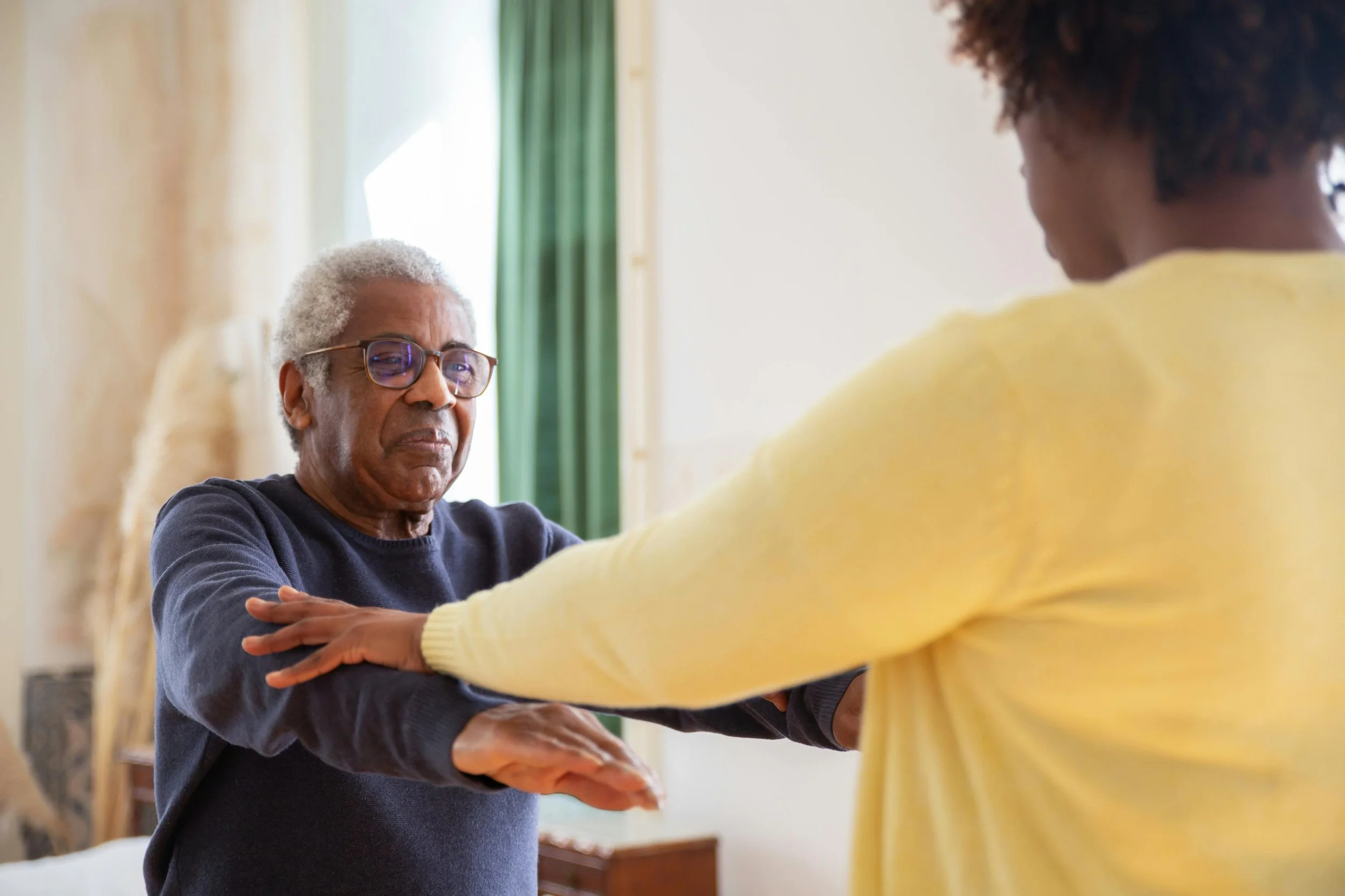
Figure 1: Stroke can be a debilitating process, and depending on how much the stroke has affected the person, it could be a long journey of recovery. One possible treatment to enhance upper limb recovery from stroke is bilateral arm training. Image from: Pexels. (https://www.pexels.com/)
[1] M. Katan and A. Luft, “Global burden of stroke,” Semin. Neurol., vol. 38, no. 2, pp. 208–211, Apr. 2018, doi: 10.1055/s0038-1649503.
[2] S. M. Bindawas, H. M. Mawajdeh, V. S. Vennu, and H. M. Alhaidary, “Functional recovery differences after stroke rehabilitation in patients with uni- or bilateral hemiparesis,” Neurosciences, vol. 22, no. 3, pp. 186–191, Jul. 2017, doi: 10.17712/nsj.2017.3.20170010.
[3] S. Y. Schaefer, K. Y. Haaland, and R. L. Sainburg, “Hemispheric specialization and functional impact of ipsilesional deficits in movement coordination and accuracy,” Neuropsychologia, vol. 47, no. 13, pp. 2953–2966, Nov. 2009, doi: 10.1016/j. neuropsychologia.2009.06.025.
[4] C. Blackstone, “Chapter 41 – Hereditary spastic paraplegia,” in Handbook of Clinical Neurology, Vol. 148, D. H. Geschwind, H. L. Paulson, and C. Klein, Eds., Amsterdam, The Netherlands; New York, NY, USA: Elsevier, 2018, ch. 41, pp. 633–652. [Online]. doi: 10.1016/B978-0-444-64076-5.00041-7. Available: https://www.sciencedirect. com/
[5] A. L. Natali, V. Reddy, and B. Bordoni, “Neuroanatomy, Corticospinal Cord Tract,” StatPearls. [Online]. Available: https://www.ncbi.nlm.nih.gov/books/ NBK535423/
[6] N. Kang, J. J. Summers, and J. H. Cauraugh, “Non-invasive brain stimulation improves paretic limb force production: a systematic review and meta-analysis,” Brain Stimul., vol. 9, no. 5, pp. 662–670, Sep. 2016, doi: 10.1016/j.brs.2016.05.005.
[7] S. M. Waller and J. Whitall, “Bilateral arm training: why and who benefits?,” NeuroRehabilitation, vol. 23, no. 1, pp. 29–41, 2008.
[8] N. Murase, J. Duque, R. Mazzocchio, and L. G. Cohen, “Influence of interhemispheric interactions on motor function in chronic stroke,” Ann. Neurol., vol. 55, no. 3, pp. 400–409, Mar. 2004, doi: 10.1002/ana.10848.
[9] C. Lee, Y. Kim, and B.-K. Kaang, “The primary motor cortex: the hub of motor learning in rodents,” Neuroscience, vol. 485, pp. 163–170, Mar. 2022, doi: 10.1016/j.neuroscience.2022.01.009.
[10] C. E. Lang, “Chapter 15 - Impaired motor control,” in Geriatric Physical Therapy, 3rd ed., A. Guccione, R. Wong, and D. Avers, Eds., St Louis, MO, USA: Mosby, 2012, ch. 15, pp. 272–291. [Online]. doi: 10.1016/B978-0-323-02948-3.00024-9. Available: https://www.sciencedirect.com/
[11] J. Feher, “The Action Potential,” in Quantitative Human Physiology. New York, NY, USA; Orlando, FL, USA; San Diego, CA, USA: Academic, 2012. [Online]. Available: https://www. sciencedirect.com/book/9780123821638/quantitative-humanphysiology
[12] A. Gnanaprakasam, S. Karthikbabu, N. Ravishankar, and J. M. Solomon, “Effect of task-based bilateral arm training on upper limb recovery after stroke: a systematic review and metaanalysis,” J. Stroke Cerebrovasc. Dis., vol. 32, no. 7, p. 107131, Jul. 2023, doi: 10.1016/j.jstrokecerebrovasdis.2023.107131.
[13] A. Pollock, S. E. Farmer, M. C. Brady, P. Langhorne, G. E. Mead, J. Mehrholz, and F. van Wijck, “Interventions for improving upper limb function after stroke,” Cochrane Database Syst. Rev., vol. 2014, no. 11, Art. no. CD010820, Nov. 2014, doi: 10.1002/14651858. CD010820.pub2.
[14] G. N. Lewis and W. D. Byblow, “Neurophysiological and behavioural adaptations to a bilateral training intervention in individuals following stroke,” Clin Rehabil, vol. 18, no. 1, pp. 48– 59, Feb. 2004, doi: 10.1191/0269215504cr701oa.
[15] L. Chen, K. A. Cummings, W. Mau, Y. Zaki, Z. Dong, S. Rabinowitz, R. L. Clem, T. Shuman, and D. J. Cai, “The role of intrinsic excitability in the evolution of memory: significance in memory allocation, consolidation, and updating,” Neurobiol. Learn. Mem., vol. 173, p. 107266, Sep. 2020, doi: 10.1016/j.nlm.2020.107266.
[16] K. J. Han and J. Y. Kim, “The effects of bilateral movement training on upper limb function in chronic stroke patients,” J Phys Ther Sci, vol. 28, no. 8, pp. 2299–2302, Aug. 2016, doi: 10.1589/jpts.28.2299.
[17] N. Takeuchi and S.-I. Izumi, “Maladaptive plasticity for motor recovery after stroke: mechanisms and approaches,” Neural Plast, vol. 2012, p. 359728, 2012, doi: 10.1155/2012/359728.
[18] J. J. Summers, F. A. Kagerer, M. I. Garry, C. Y. Hiraga, A. Loftus, and J. H. Cauraugh, “Bilateral and unilateral movement training on upper limb function in chronic stroke patients: a TMS study,” J. Neurol. Sci., vol. 252, no. 1, pp. 76–82, Jan. 2007, doi: 10.1016/j. jns.2006.10.011.
[19] J. H. Cauraugh and J. J. Summers, “Neural plasticity and bilateral movements: a rehabilitation approach for chronic stroke,” Prog. Neurobiol., vol. 75, no. 5, pp. 309–320, Apr. 2005, doi: 10.1016/j. pneurobio.2005.04.001.
[20] P. Mateos-Aparicio and A. Rodríguez-Moreno, “The impact of studying brain plasticity,” Front. Cell. Neurosci., vol. 13, p. 66, 2019, doi: 10.3389/fncel.2019.00066.
[21] C. M. Stinear, M. A. Petoe, S. Anwar, P. A. Barber, and W. D. Byblow, “Bilateral priming accelerates recovery of upper limb function after stroke: a randomized controlled trial,” Stroke, vol. 45, no. 1, pp. 205–210, Jan. 2014, doi: 10.1161/STROKEAHA.113.003537. [22] M. E. Stoykov, E. King, F. J. David, A. Vatinno, L. Fogg, and D. M. Corcos, “Bilateral motor priming for post stroke upper extremity hemiparesis: A randomized pilot study,” Restor Neurol Neurosci, vol. 38, no. 1, pp. 11–22, 2020, doi: 10.3233/RNN-190943.

Dawn is currently in her final year of doing an Applied Exercise and Sport Sciences pathway in the BSc programme. She has a keen interest in movement neuroscience and in how movement can support rehabilitation. In her spare time she loves to compose music, write speculative fiction and knit.