
Beyond the Rising Tides: Climate Change and the Loss of Pacific Cultural Heritage
Climate Change and Heritage | Sifiti Malaki
No matter where the toloa bird flies, it always yearns for and returns to its waters.
- Samoan proverb
As a Pacific student studying at the University of Auckland, I have learnt that making a difference must first start with a small voice, which then ignites and inspires others to be heard. Growing up in Samoa, many of my childhood memories were made at the beach, playing with my siblings and cousins. We could swim further out and find food sources without needing to dig through black sand or dive deeper. Back then, we didn’t have to worry about climate change or sea level rise; how simple life was. But that’s no longer the case for the new generation of children being raised there. Why? Because sea levels are increasing by an average of 4.5 mm each year in the Pacific region [1]. Sea level rise has stolen the shallow waters we used to play in and robs the new generation of that childhood experience.
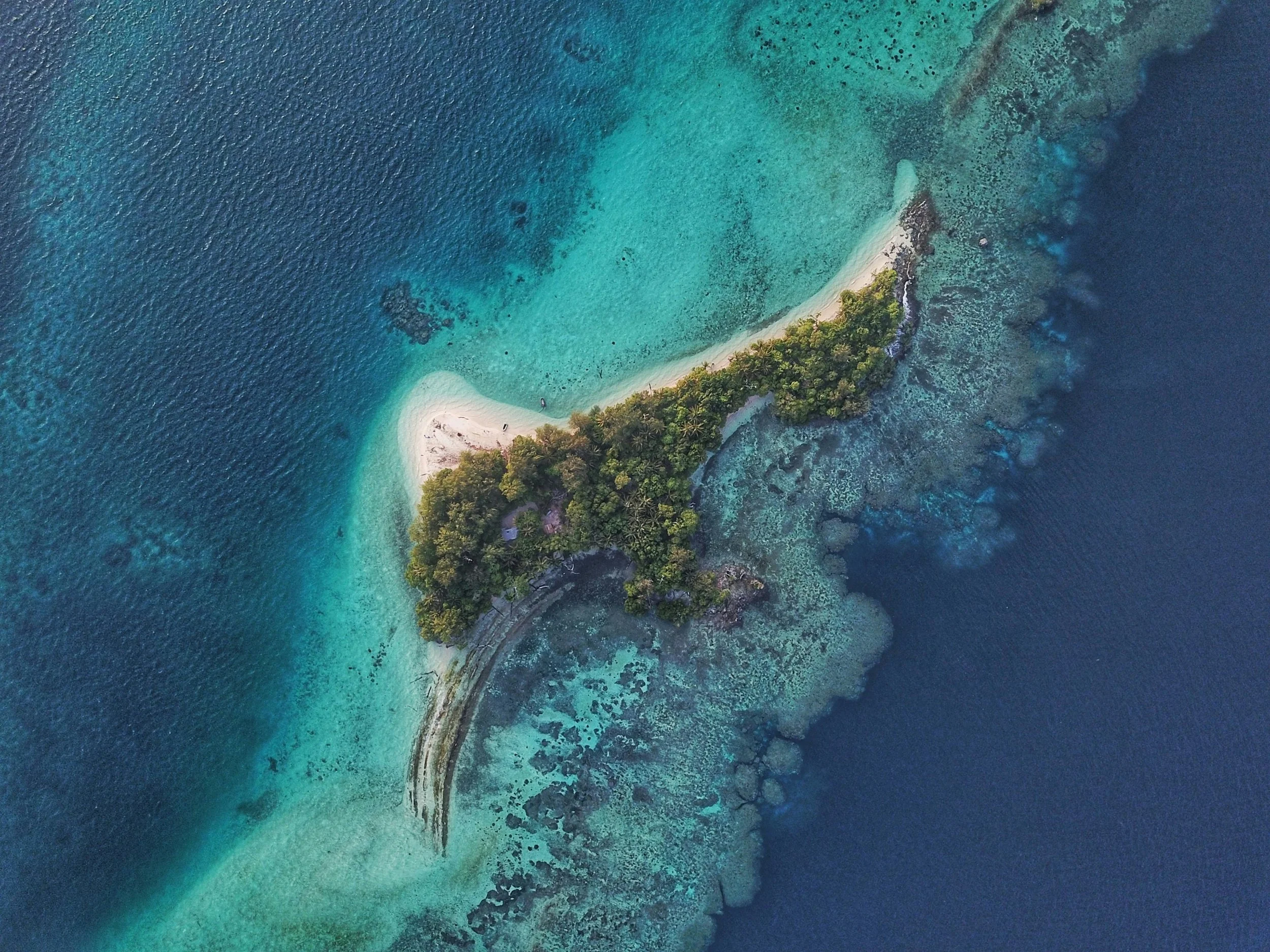
Figure 1: An islet in the Solomon Islands [2]. Low-lying Pacific Island nations are on the frontlines of sea level rise, threatening both physical territory and cultural heritage.
Sea level rise is caused by global warming, which is driven by human activities like burning fossil fuels. This results in the melting of land ice and thermal expansion [3]. The ocean absorbs 90% of the excess heat from the warmed atmosphere [1], so the greenhouse effect has a targeted impact on the current state of the oceans.
What gives Pacific Island nations a disadvantage in the face of sea level rise? The Pacific is the world’s biggest and deepest ocean, covering around 30% of Earth’s surface [1]. Yet the most distinguishing characteristic of the Pacific Islands is their size. Compared to other countries, they are small landmasses, generally made up of low-lying and isolated islands scattered across the vast open waters.
The people of the Pacific produce just 0.02% of greenhouse gas emissions, which means they contribute almost nothing to climate change. But they are also the most affected by sea level rise [1], highlighting a major climate injustice. As the ocean keeps rising, the people will soon have to relocate, leaving their origins in ruins. Due to the small landmasses and low elevations, Pacific people have no higher ground or greener territory to retreat to when rising currents invade the coastlines. Now imagine that: running away from the home you once knew as a child because of the dangers that have invaded.
Displacing people from their land removes a significant part of history, not only in international contexts but also cultural. Culture can be defined as a shared set of ideas, norms, and behaviours common to a group of people inhabiting a geographic location [4]. Cultural identity for Pacific people is bound to their territories; land is home and legacy. Being suddenly displaced puts a great amount of community identity at risk.
Losing much of that cultural history due to climate change and sea level rise is a profound unfairness that not only erases a past but, more importantly, a future. For generations, Pacific people have thrived, relying on strategic adaptations to the different weather events they encounter. Traditional practices have developed to meet the basic needs of everyone during adverse weather events such as cyclones, storms, floods, and droughts [5]. Even without advanced technology, Pacific people have been able to persist for a long time without the help of the outside world.
Another impressive example is the mangrove planting strategy used in Tuvalu to help protect the coastlines against strong sea currents [6]. Mangroves are salt-tolerant trees and shrubs that grow in shallow coastal waters and mudflats. They are known in New Zealand as manawa and thrive mostly in the upper North Island's tidal estuaries [7]. Their thick trunk and tangled branches dissipate the force of strong waves, while the roots bind soil to prevent coastal erosion. Mangroves can also support diverse marine life.
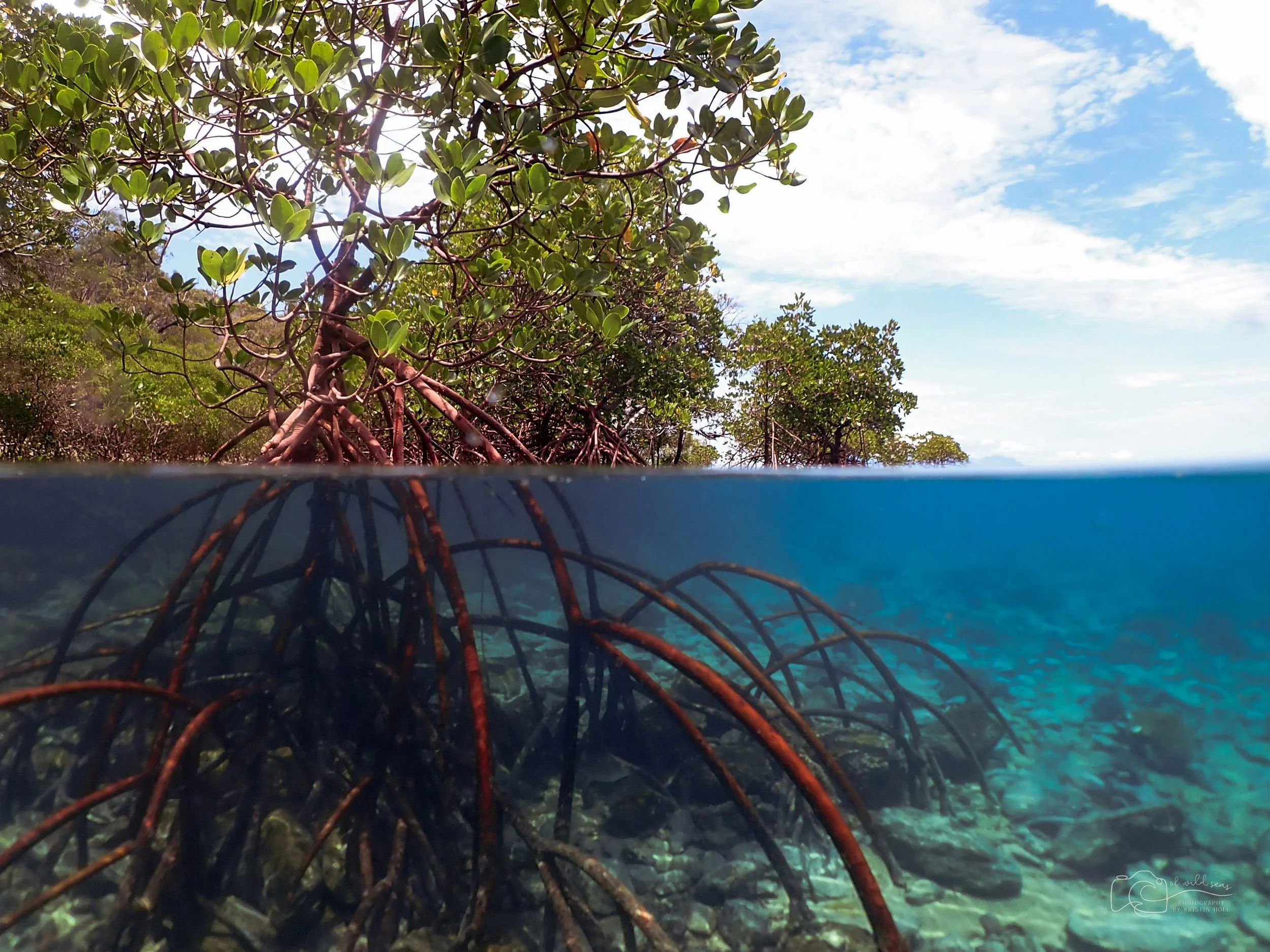
Figure 2: Mangrove ecosystems serve as natural buffers against high-energy wave action and shoreline erosion. Photo from [8].
Solutions to sea level rise must integrate the practices that these small Pacific islands have already established to respond to climate change. Locals have experienced firsthand the effects of sea level rise and should be prioritised when planning a solution and implementing change, so that scientific researchers from outside countries know what local and Indigenous people will be dealing with. The preservation of culture in small Pacific islands relies on what traditional ecological knowledge the locals will share, proof of the experiences they have endured.
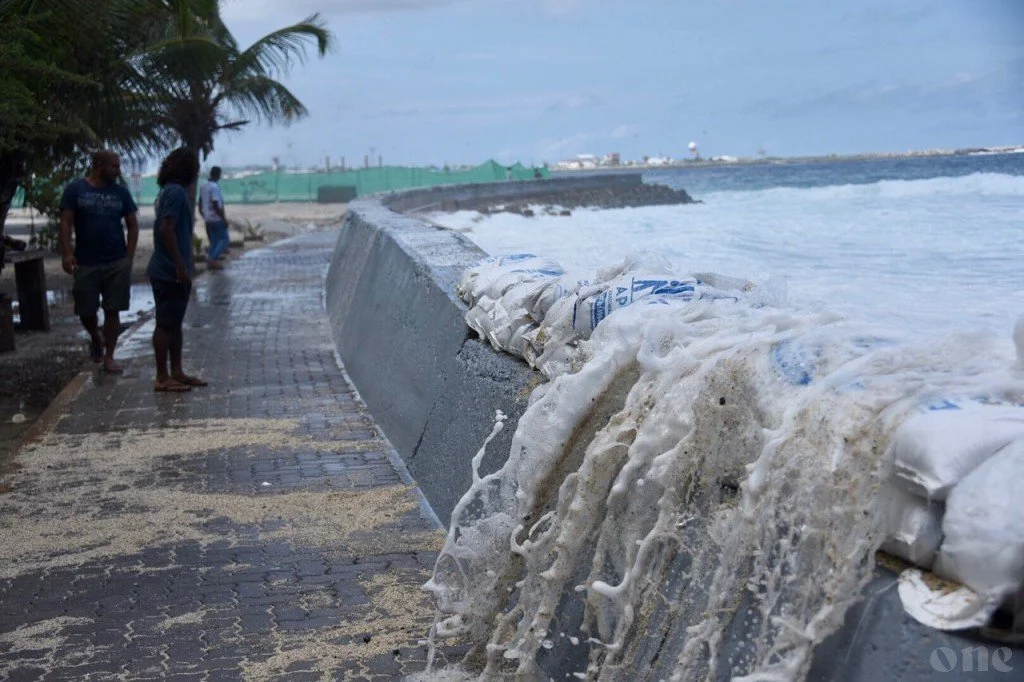
Figure 3: Coastal flooding in the Maldives [9]. Small Island Developing States (SIDS) across both the Pacific and Indian Oceans share an existential vulnerability to global sea level rise, facing severe shoreline retreat and displacement.
Pacific people believe that we are all voyagers, people that make long, distant, and dangerous journeys, usually by sea. “We were voyagers” is a statement that defines Pacific people and calls to the true origin behind our heritage. When voyagers decided to settle down on the small islands in the Pacific Ocean, it was not to limit their survival to only what they could see. It was to build a future where our children could live on without worry.
To lose one’s land is to lose one’s identity, and our land is the true epitome of who we are. It is the strength that reunites us no matter how far we have drifted. When an island disappears beneath the waves, we lose far more than a geographic standing on the map. We lose centuries of ancestral stories, customary languages, and irreplaceable ways of knowing the world.
As young scholars and Pacific voices standing here in Aotearoa, our responsibility is to ensure that small island nations are not treated as insignificant in a world where we lose the most to sea level rise. We must demand climate justice that honours local knowledge, champions Indigenous sovereignty, and protects the lands that define who we are. For the Pacific, standing steadfast is not just about surviving the rising tide, it is about keeping our history, our identity, and our future alive.
[1] C. Nullis. "Climate change transforms Pacific Islands." World Meteorological Organization. Accessed: Aug. 24, 2026. [Online]. Available: https://wmo.int/news/media-centre/climate-change-transforms-pacific-islands.
[2] V. Garside. "A close-up of a sea creature." Unsplash. Accessed: Aug. 31, 2026. [Online]. Available: https://unsplash.com/photos/ejU8BDQbBk8.
[3] NASA Science. "The Causes of Climate Change." science.nasa.gov. Accessed: Aug. 24, 2026. [Online]. Available: https://science.nasa.gov/climate-change/causes/.
[4] L. Yamamoto, "Climate Relocation and Indigenous Culture Preservation in the Pacific Islands," Georget. J. Int. Aff., vol. 21, pp. 150–157, 2020, doi: 10.1353/gia.2020.0003.
[5] T. Weir, L. Dovey, and D. Orcherton, "Social and cultural issues raised by climate change in Pacific Island countries: An overview," Reg. Environ. Change, vol. 17, no. 4, pp. 1017–1028, July 2017, doi: 10.1007/s10113-016-1012-5.
[6] Coconet TV, The Forgotten Pacific Documentary. (Sept. 22, 2024). Accessed: Aug. 24, 2026. [Online Video]. Available: https://www.youtube.com/watch?v=cvCMGuIy79A.
[7] New Zealand Plant Conservation Network. "Avicennia marina subsp. australasica." nzpcn.org.nz. Accessed: Aug. 24, 2026. [Online]. Available: https://www.nzpcn.org.nz/flora/species/avicennia-marina-subsp-australasica/.
[8] K. Hoel. "An underwater view of a mangrove forest." Unsplash. Accessed: Aug. 31, 2026. [Online]. Available: https://unsplash.com/photos/an-underwater-view-of-a-mangrove-forest-i5kMNyhiw6c.
[9] One Online. “Swell waves cause flooding in capital Male' City.” oneonline.mv. Accessed: Aug. 31, 2026. [Online]. Available: https://v1.oneonline.mv/en/10995.

Sifiti Malaki- Bachelor of Science, Environmental Science
Sifiti was born in Samoa and migrated to New Zealand in 2013 with her family. She spends most of her time reading and dancing, the most effective way to cure depression because depression can’t hit a moving target. She loves God, her family, and her dog Leo.